
The Collective Crash: Part 1
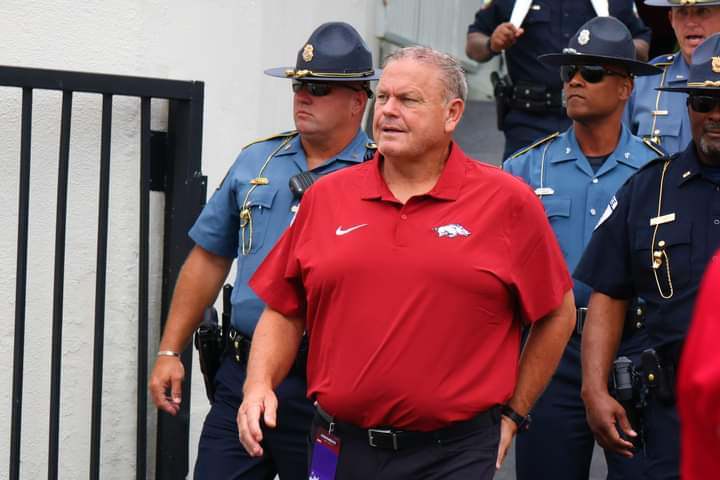
Sam Pittman did not suddenly forget how to coach football. A few years ago, he was the toast of Fayetteville. He built a bruising, old-school SEC roster that actually worked. Then the rules of the sport changed overnight. Arkansas suddenly had to compete in an open market where loyalty costs seven figures. The university appointed him head coach. The reality, however, is far more complicated. The booster-funded NIL collective now dictates the actual talent on the field.
The Multi-Million Dollar Trap: Why NIL Collectives Are Quietly Tearing Up Coaching Contracts
This is not just an Arkansas problem. We at 4 Star Sports Media have watched this exact scenario play out across the entire country. The traditional coaching contract is officially dead. College football is fundamentally broken right now. For decades, a newly hired coach negotiated a massive five-year deal with a clear understanding of the timeline. Year one was for establishing a culture. Year two was for recruiting your guys. Year three was for winning.
That timeline no longer exists. Today, an unregulated third-party entity—the NIL collective—is the financial engine driving the roster. If boosters are funneling millions of dollars into a collective to buy a winning team, they want an immediate return on their investment. They do not want to hear about building culture. They want College Football Playoff appearances right now.
The Death of the Rebuild
The coaching grace period has completely evaporated. When a program hires a new coach, the athletic director is no longer the most powerful person in the room. The collective’s board holds the real leverage. Coaches used to rely on player development to save their jobs during rough seasons. Now, they must rely on a constant influx of unregulated cash to field a competitive roster. If the collective runs dry, the roster falls apart. If the roster falls apart, the coach gets fired.
This creates an impossible financial standoff. Universities are terrified of paying massive coaching buyouts while simultaneously begging donors to fund the collective. You cannot ask a booster for two million dollars to buy out a failing coach, and then ask that same booster for another three million to buy a transfer portal quarterback. The math does not work.
Because of this, we are seeing coaching contracts quietly rewritten behind closed doors. Athletic departments are demanding stricter buyout language. They know the collective is paying the players, so the coach has zero excuses for losing. The financial risk of a bad hire used to fall squarely on the university. Now, that risk is being weaponized against the coaches themselves.
Coaches Are Now Hostages to the Bank
The job description in a modern coaching contract is a lie. Head coaches are no longer play-callers or talent developers. They are General Managers and Chief Fundraising Officers. They spend more time begging donors for collective money than they do watching game film. A coach can evaluate a five-star prospect perfectly. The collective, however, ultimately tells the coach what they are allowed to spend. If the collective gets outbid by a rival SEC program, the coach takes the blame for the loss on Saturday.
This strips all the actual power away from the coaching staff. Contracts with collectives can quietly dictate where a college player ends up enrolling. Coaches advise the collective on who they want, but the donors write the checks. When a coach’s success is entirely dependent on a third-party slush fund, their performance metrics are tied to factors outside their control.
We are watching legendary coaches walk away from the sport because they refuse to operate this way. They realize they are no longer leading a football program. They are managing a hedge fund with a mascot. Meanwhile, ambitious Group of Five programs like Memphis are trying to exploit the glitch. Head coach Charles Huff and his staff are forced to build absurd, high-scoring offensive machines just to outrun their financial deficits.
The impending revenue-sharing model will only make this worse. Programs will soon pay players directly, but collectives are not going anywhere. They will remain the dark-money advantage for the elite programs willing to exploit the system. Coaches at middle-tier programs will be caught in the crossfire. They will be expected to produce elite results with minor-league funding.
If we are honest about how money moves in this sport, we have to admit the truth. Coaching contracts are no longer about leadership, culture, or strategy. They are a temporary lease on a donor’s bank account. When the money runs out, the coach is always the first one out the door.