

The college football landscape we exist in today is unrecognizable from the sport we watched just half a decade ago. We have fully entered a single-window, unlimited transfer, revenue-sharing era.
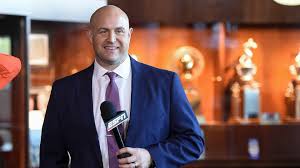
The Era of “Roster Management”: How Cole Cubelic Predicted College Football’s Wild West
The concept of signing a high school prospect and methodically developing him into a redshirt junior starter feels antiquated. Instead, modern programs are spending upwards of $40 million to field competitive teams, treating every offseason like an uncapped NFL free agency period.
When the NCAA Transfer Portal was first gaining mainstream traction around 2020 and 2021, many coaches, analysts, and fans viewed it as a supplementary tool—a way to plug an immediate injury hole or find a backup quarterback. Fan bases routinely panicked when highly-rated freshmen departed, treating the loss of a single blue-chip recruit as a death blow to their program’s future.
But ESPN and SEC Network analyst Cole Cubelic recognized the impending shift long before it materialized. In an interview around that time on the 4 Star Sports Show, Cubelic famously stated, “We will need roster management.” He recognized early on that college football was no longer just about recruiting; it was transitioning into a high-stakes, transactional enterprise requiring year-over-year retention strategies.
How Cubelic Was Right: The Shift in the Sport
The evolution of the portal has been staggering. Back in 2020, there were roughly 1,583 transfer portal entrants across college football. By 2024—driven by the implementation of Name, Image, and Likeness (NIL) legislation in 2021—that number exploded to nearly 4,000.
As fan bases began to melt down over mass exoduses, Cubelic has been fiercely consistent in his messaging. He recently blasted the “loser mindset” of panicking over single departures. His point was simple: no single player cripples a program when they leave for the portal or the NFL draft.
Cubelic’s assertion is backed by the current success of top programs. Look at the 2026 College Football Playoff semifinalists—Indiana, Miami, Ole Miss, and Oregon. Miami, Indiana, and Ole Miss all had more than 50% of their games started by transfer players this season, and all four playoff teams are led by transfer quarterbacks. Coaches like Lane Kiffin at Ole Miss have proven Cubelic right: you don’t rebuild a program by crying over a departing freshman; you rebuild it by relentlessly attacking the portal to upgrade your physical matchups and line play.
The Numbers Behind the Madness
The reality of modern roster management hit a fever pitch with the introduction of the 2026 portal rules. The NCAA implemented a 15-day single winter window (January 2 to January 16, 2026), eliminating the spring portal window. This forced coaching staffs to construct their entire rosters, negotiate revenue shares, and finalize their depth charts in just over two weeks.
This hyper-compressed window has created a brutal environment. In 2026, an estimated 30% of players who entered the portal failed to land a roster spot at a new school. The portal is no longer just a path to more playing time; it is a highly competitive, ruthless market where true “roster management” means coaches are actively cutting their losses and processing players out to make room for proven commodities.
What’s Next for College Football?
Now that unlimited transfers are allowed with no sit-out penalties, college football is officially operating under a professional free-agency model.
What does this mean for the future? Roster retention has become the single most difficult aspect of a head coach’s job. The coaches who will survive and thrive in this era are those who act as General Managers. They must allocate a team budget, manage an intense 15-day free agency window, heavily prioritize retention of their core contributors, and understand that loyalty is now a transaction.
As Cubelic warned years ago, the days of signing a five-star recruit and assuming he is a guaranteed fixture for the next four years are dead. The college football programs that listened to him and fully embraced true roster management are the ones competing for championships. The ones that didn’t are the ones firing their coaches.