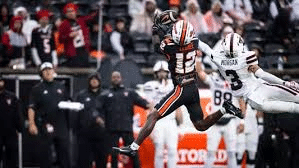

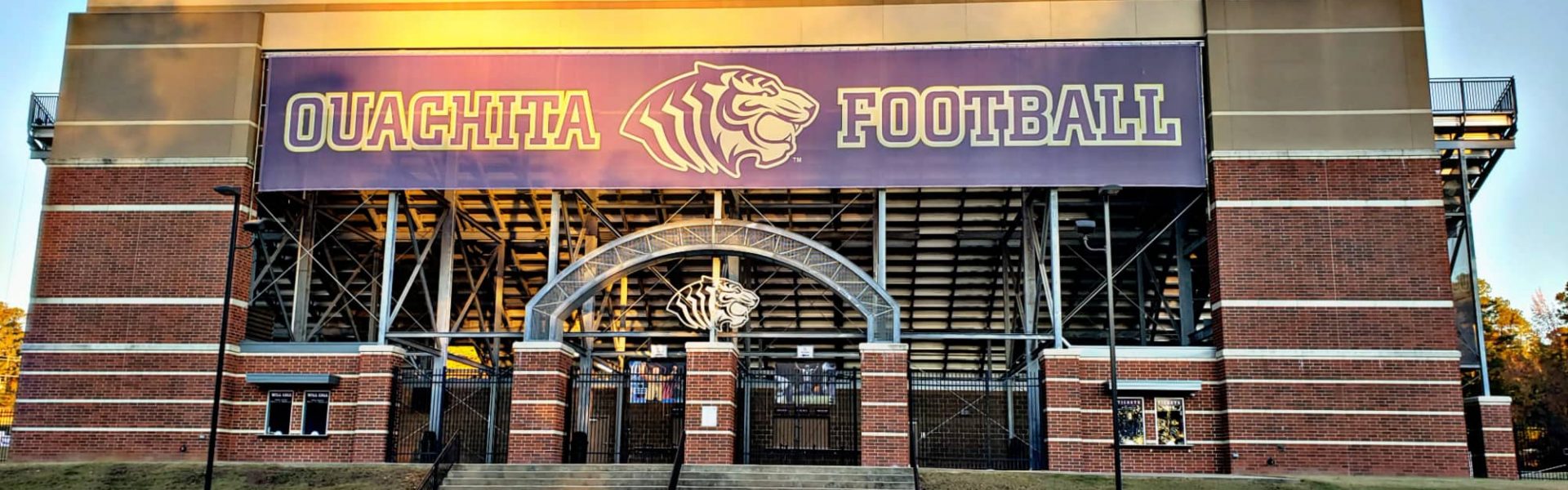
In an exclusive conversation with 4 Star Sports Media, Ouachita Baptist running backs coach TJ Cole explains why D2 football, the GAC grind, and the Tigers’ biblical standard still represent the soul of the sport.
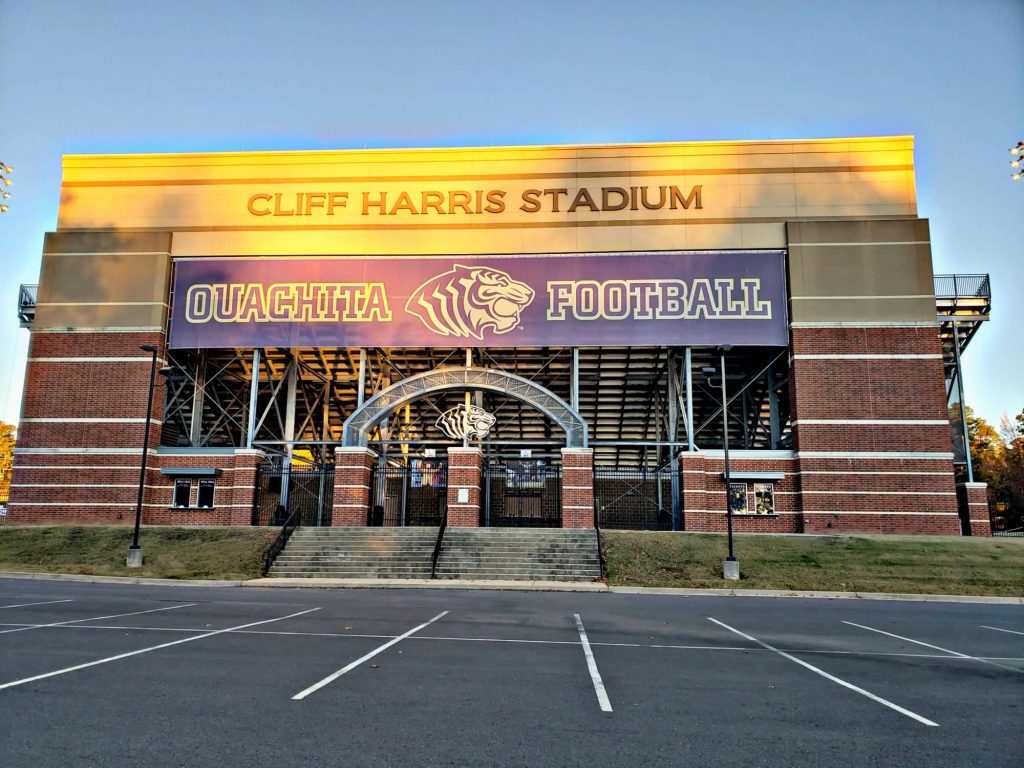
Division II football is supposed to be the sport’s quiet corner—smaller crowds, smaller budgets, games that never sniff prime time. But at Ouachita Baptist, where the Great American Conference grind meets a Christ-centered standard and a former All-American back now runs the room, D2 looks less like a consolation prize and more like the purest version of what college football used to be. TJ Cole isn’t just coaching running backs; he’s turning Ouachita into a case study for why the sport ignores this level at its own risk.
D2 Football Runs on Hunger, Not Hype
Ask Cole what separates Division II from the image most fans have, and he goes straight to the core. “What makes D2 football special is the hunger. Most guys here have something to prove, so the work ethic and passion are different. You’re coaching players who truly love football and are willing to grind for every opportunity.” There are no guarantee games or five-star safety nets here—just rosters full of players who have heard “no” enough times to make every rep feel personal.
In a college landscape where headlines revolve around NIL numbers and transfer portal drama, D2 is still built on early lifts, long practices, and kids who show up because the game still means something by itself. That’s the environment Cole steps into every day: a level where the grind isn’t a slogan on a T-shirt, it’s the price of admission.
Inside the GAC: An Overlooked Gauntlet
Take that mindset and drop it into the Great American Conference, and you get one of the most unforgiving, under-covered leagues in the country. “The GAC is different because every single week is a battle,” Cole says. “There are no easy games, and the depth of talent across the conference makes you earn everything. It’s physical football, disciplined coaching, and programs that take a lot of pride in competing.”
That’s not marketing language; it’s survival. In the GAC, you don’t scheme your way past toughness. You have to match it. Every Saturday feels like a line-of-scrimmage referendum. Line play, tackling, and discipline matter as much as any clever design. Cole’s world is one where you’re not game-planning for television windows—you’re game-planning to get out of a league slate without getting exposed.
The Ouachita Standard: Trust, Care, Commitment
What makes Ouachita Baptist stand out inside that gauntlet is not just the win-loss record, but the foundation underneath it. Cole doesn’t talk about the Tigers as a stepping stone; he talks about them as a standard. “What stands out about Ouachita is the people and the purpose behind the program. It’s competitive football in a strong conference, but it’s also an environment where you’re challenged to become a better teammate, student, and man of faith.”
He boils the Ouachita standard down to three words. “It’s a culture where trust means you do your job, care means you invest in people, and commitment means you don’t cut corners. That’s the expectation at Ouachita, not just as a football player, but as a student and a man.” Trust is knowing the back will be in the right gap on protection. Care is checking on a teammate who’s struggling off the field. Commitment is running through the line on a Tuesday drill with nobody in the stands. It’s a football program, but it’s also a daily test of who you are when nobody is watching.
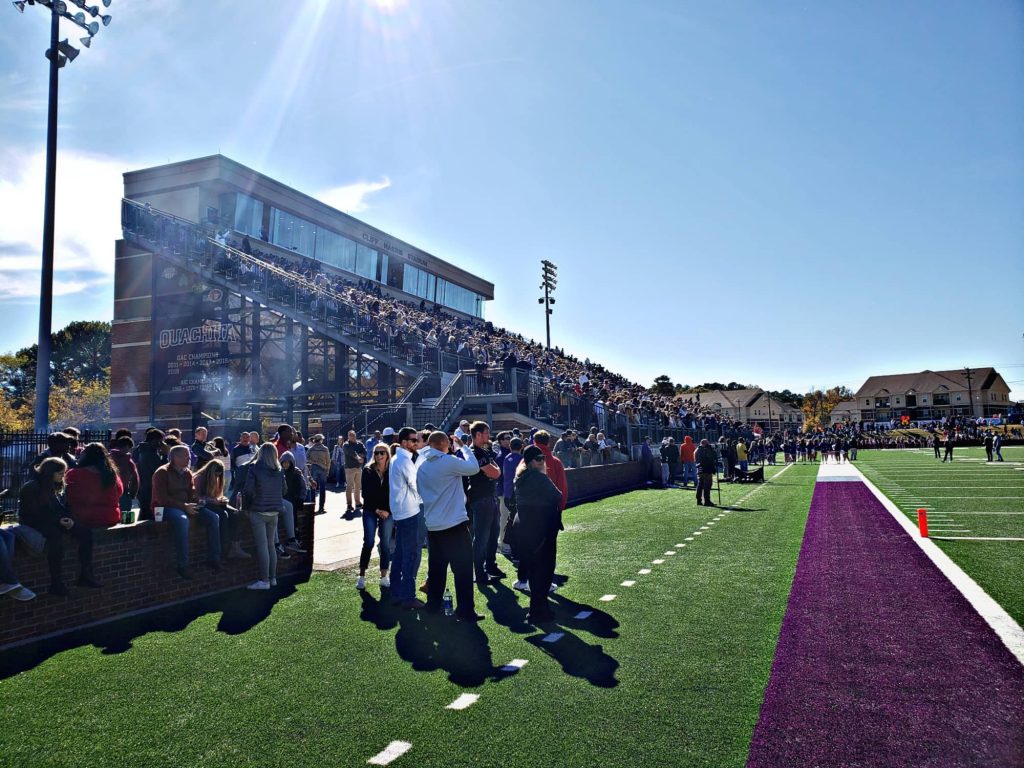
TJ Cole’s Room: A Blueprint for Modern Leadership
If you want to understand how faith and football actually connect in real time—not just in pregame devotionals—listen to how Cole defines leadership in his room. “I don’t want my room led by emotion, pride, or fear of mistakes. I want it led with discipline, humility, and ownership. When guys mess up, they’re coached hard, but they’re also reminded they’re not defined by one play.”
That’s his picture of biblical leadership in a modern locker room. It doesn’t mean lowering the bar. It means raising it with a different motive. Coaching hard is non-negotiable; so is seeing players as more than their last snap. “I connect faith and football by how I lead my room every day,” he explains. “It shows up in consistency, honesty, and how I treat people, especially when things aren’t going well. I try to coach my running backs with truth and accountability, but also with patience and care. Football is the platform, but the goal is bigger than the game. I want my room to reflect discipline, humility, and ownership in everything we do.”
In an era where “culture” is a buzzword in every press conference, Cole’s approach is specific and lived. Own your mistakes. Respond, don’t panic. Lead with humility and standards, not ego and fear. It’s the kind of leadership every Power Four program claims to want—and it’s happening in a D2 running backs room in Arkadelphia.
Downhill Proof on Saturdays
For all the talk about standards and leadership, the clearest expression of what Ouachita is building shows up when the ball is snapped. Cole’s vision for his room is simple and brutal. “We want to play disciplined, downhill, and no self-inflicted mistakes,” he says. “Just consistent, physical football that wears people down over four quarters.”
Inside the GAC, that identity travels. Downhill means no wasted motion at the mesh point. Disciplined means protections are sharp, and the ball is protected. No self-inflicted mistakes means the Tigers are not going to beat themselves with sloppy penalties or mental errors. In a league where “everybody is good,” Cole knows the margin is thin. “Winning here at Ouachita is about consistency and toughness every day. Everybody is good, so games come down to details, discipline, and who executes longer under pressure. You win by stacking the small things daily—practice habits, attention to detail, and physicality.”
That’s not just coach-speak; it’s the quiet math of Division II football. Stack enough good Tuesdays and Wednesdays, and you give yourself a chance in the fourth quarter on Saturday.
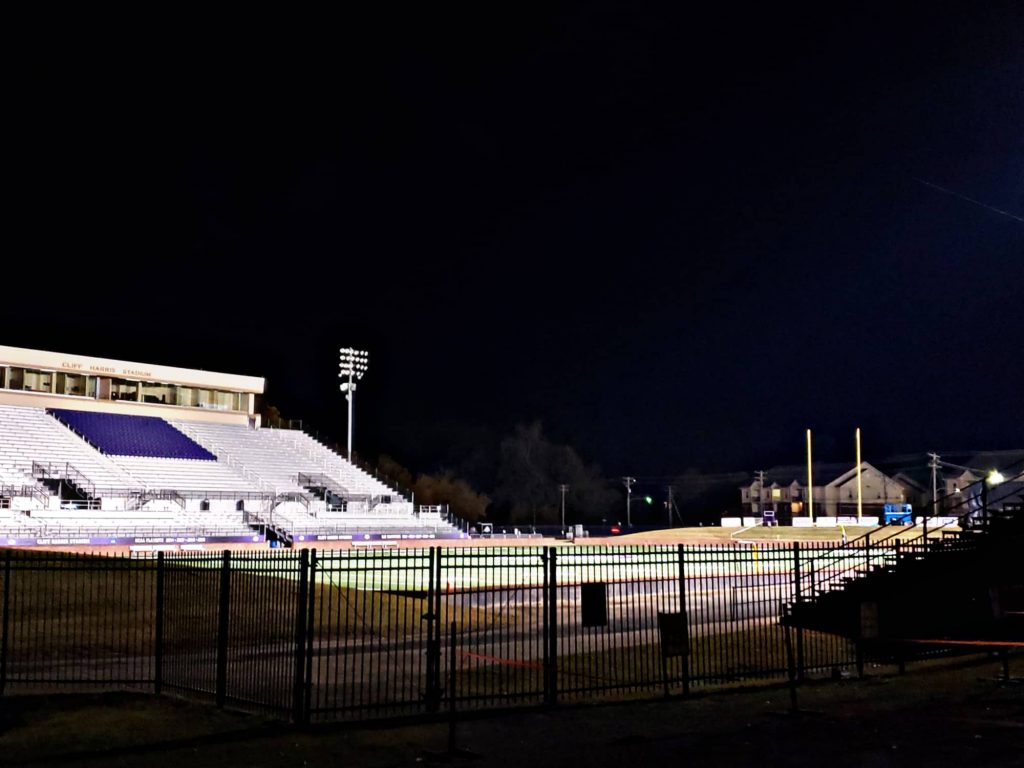
Credits – Wes Pruett
Where the Soul of the Sport Still Lives
Zoom all the way out, and Ouachita Baptist and TJ Cole look less like a local D2 story and more like a mirror held up to the rest of college football. This is a program living without luxury, in a conference that doesn’t hand out bye weeks, under a standard that demands both physical toughness and spiritual backbone. The running backs room isn’t chasing viral clips; it’s chasing discipline, humility, and ownership—one downhill carry at a time.
In a sport obsessed with realignment maps, media rights numbers, and recruiting stars, the game’s soul might just be hiding in places like Arkadelphia. If you really want to know what college football looks like when the noise is stripped away, stop scrolling past the D2 scores. Start with Ouachita Baptist and a former star turned coach who believes “small-time” football can still show the sport at its best.