
It did not start with a touchdown, a tailgate, or even a college memory. For Sherrie Hopper, Memphis Tigers football began in the middle of one of life’s hardest moments, when her nephew was battling cancer at St. Jude and her family needed something that felt normal, hopeful, and alive. That is where a program became a refuge, and over time, a refuge became family.
The Game That Became Family: Why Memphis Football Means More Than Ever to Sherrie Hopper
Hopper, now President-elect of the Highland Hundred, did not first fall for Memphis football as a student. Her connection to the program came later, through pain, gratitude, and a series of moments that reminded her this community could be about far more than what happened on Saturdays. Today, that same belief fuels the way she serves one of the most visible support organizations tied to Tigers football, a group whose mission has been to elevate Memphis football and promote the interests and welfare of the University of Memphis.
A Program Found in a Hospital Season
“I never went to Tiger football while I was a student,” Hopper said. “I actually started going to football games while my nephew was a patient at St. Jude.”
Those games were not originally about the standings or the scoreboard. They were an escape hatch. In the middle of doctor visits, fear, and exhaustion, Memphis football gave her nephew a chance to step outside the weight of his illness, if only for a few hours.
“It was a needed break for him to forget his cancer battle even if it was for a game,” Hopper said.
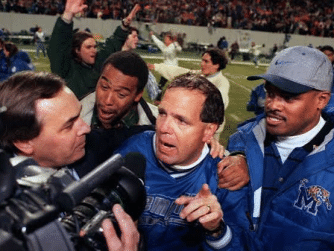
Then came the moment that changed everything. Hopper sent an email to then-head coach Justin Fuente, simply hoping to get a signed football for her nephew. Instead, the gesture became far more personal and far more lasting.
“He found out he was a St. Jude kid and brought him in before the Miami Beach Bowl and let him try on his ring,” Hopper said. “I fell in love with the program then. It was more than football.”
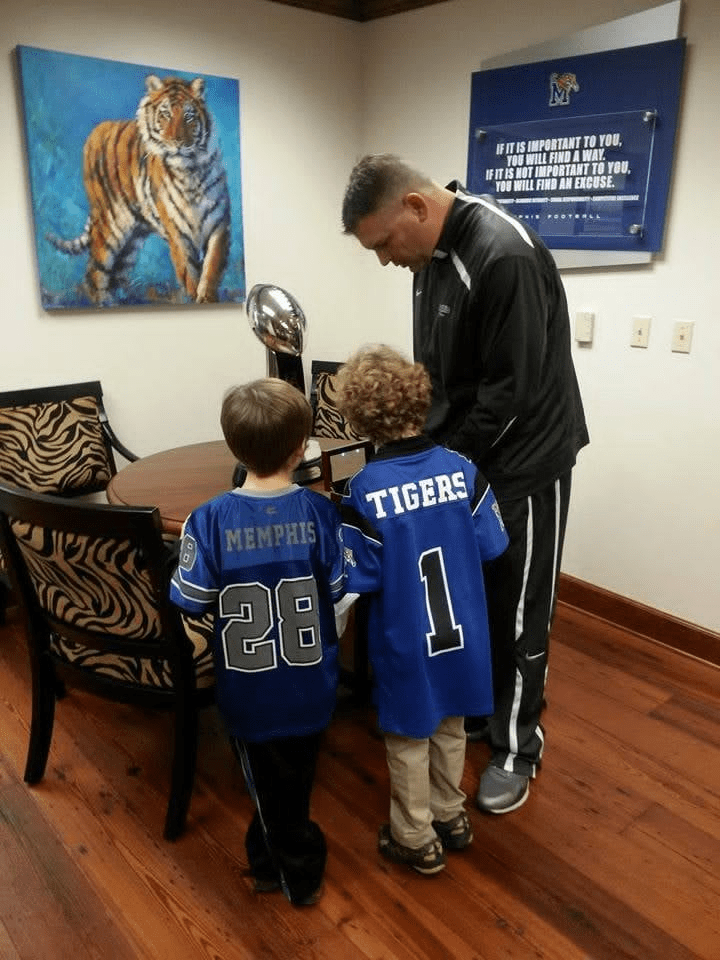
That is the line that explains everything. For Hopper, Memphis football stopped being just a team and became something deeply human. It became a place where people noticed, where they cared, and where a child in the middle of a fight could be treated like he belonged to something bigger than his pain.
“Twelve years later, me and my nephew still do not miss games,” she said. “So Tiger football is near and dear to my heart. It’s almost family.”
The Heart Behind the Highland Hundred
That word, family, sits at the center of Hopper’s work with the Highland Hundred. The organization is the official booster club supporting Memphis Tigers football and has long been one of the key support pillars connected to the program.
But Hopper’s experience with the Highland Hundred is not defined only by structure, mission statements, or official roles. It is defined by people.
“While working with the Highland Hundred I have gotten to meet some extraordinary people that have become family to me,” she said. “Like the Glass family.”

For her, the organization has provided more than access and involvement. It has opened the door to serving other families the same way her own family was once served. That emotional thread runs through the stories she tells most vividly.
“We have taken the opportunities the HH has given to help other Tiger families like mine find some distractions in the storms,” Hopper said.
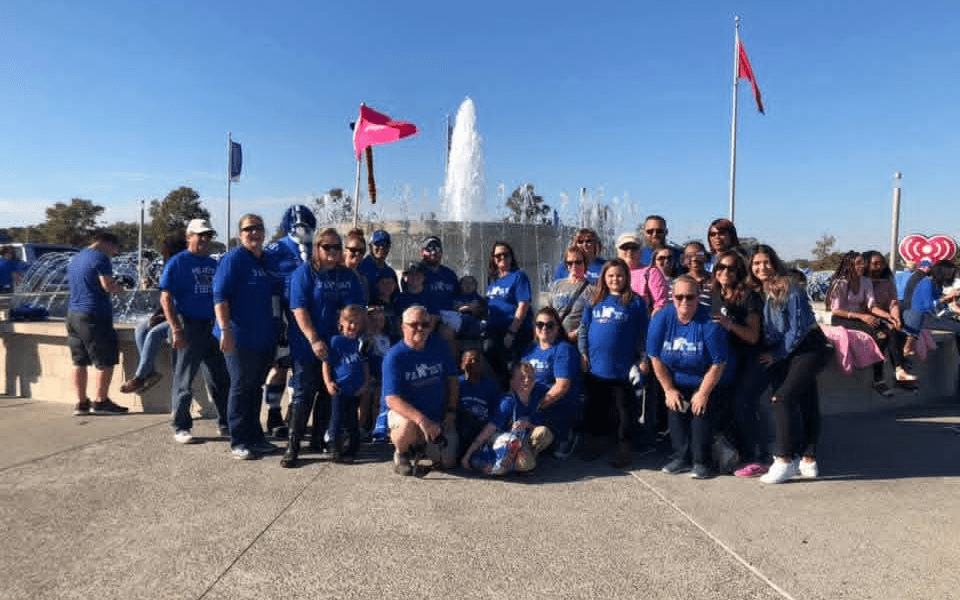
She remembers praying over Hadley Whitaker in front of the fountain on Tiger Lane after a catastrophic seizure. She remembers the way then-head coach Mike Norvell visited Hadley in the hospital after hearing about the situation through family connections. She remembers visiting Jackson Hughey at St. Jude and, as she put it, “smuggling Brady White in to play video games.”
These moments reveal what the Highland Hundred means when it is at its best. Yes, it supports Memphis football financially. Yes, it helps build enthusiasm and strengthen backing around the program. But in Hopper’s telling, it also helps create bridges between the team, the city, and families who need hope.
Protecting Community in a New Era
Even with all of that connection, Hopper knows college football is changing. Like many longtime supporters, she sees a growing challenge in the modern era: it is becoming harder to build lasting relationships with players when movement is constant and rosters turn over so quickly.
“The hardest thing to accept is that we may never get to know our players the way that we once did,” she said. “We love these players and we love to get to know them. We want them to be a part of our community even after their time on the field is done. It’s hard to do when they are one and done.”
That tension is real for programs everywhere, but it feels especially important at a place like Memphis, where identity has long been tied to relationships, loyalty, and local support. Hopper does not pretend Memphis can win every battle with money. Instead, she believes the answer is to make the community matter so much that players feel the cost of leaving in a personal way, not just a financial one.
“I hope to use my role to figure out a way to continue to foster community in this new era of football,” she said. “I know we can’t compete with the money, but maybe just maybe if we can get a player to at least hesitate on jumping in that portal because of the community they would lose, then we have done our job.”
That vision extends beyond current players. Hopper also wants the Highland Hundred to keep helping former Tigers invest back into Memphis, especially those who use their platform to serve others.
“We also want to continue to help former Tigers like Calvin Austin and Anthony Miller in their efforts to give back to our community by helping them with their camps,” she said. “We love it when they give back and invest in home.”
That idea, home, may be the most powerful word in this entire story. It is what Hopper first found in a season of fear. It is what she now works to preserve in a sport that can often feel transactional. And it is what the Highland Hundred, at its strongest, has always tried to protect through its support of Memphis football and the wider university community.
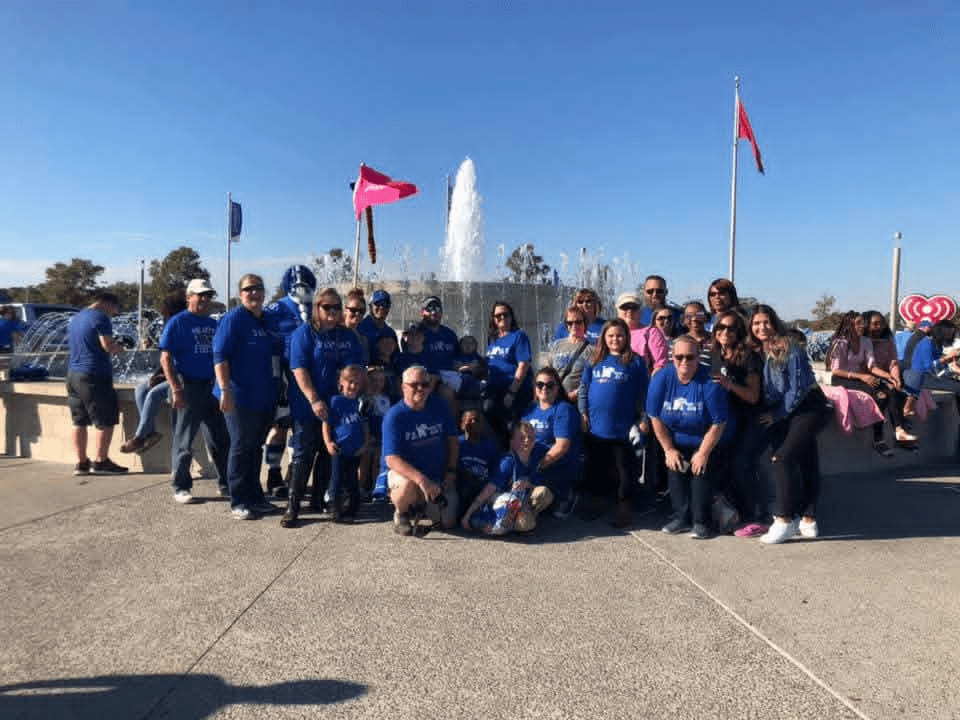
“The folks in the Highland Hundred truly do see this as a labor of love,” Hopper said. “And of course we do financially support our Tiger football team as a bonus to the Tiger family we get to do life with.”
In the end, Hopper’s story is not just about fandom. It is about what can happen when football becomes a source of comfort, belonging, and service. What began as a needed break for a child at St. Jude became a lifelong bond with a program, a leadership role in one of its key support groups, and a commitment to helping other families find light in their own storms. For Sherrie Hopper, Memphis football is not only something to cheer for. It is something to live with, give through, and love like family.