
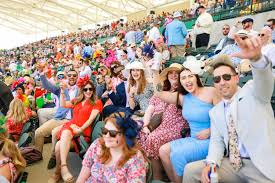
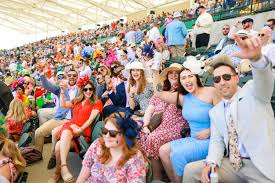
Every year, millions of people bet on the Kentucky Derby without really understanding what the numbers on the screen mean. The 2026 Derby is no different: a deep, competitive field and a board full of fractions – 9‑2, 6‑1, 15‑1 – that secretly tell the story of risk, reward, and public perception.
Kentucky Derby by the Numbers: Odds, Payouts, and What They Actually Mean
Start with the basics. Derby odds are listed in fractional form. A price of 9‑2 on a favorite means that for every 2 dollars you bet, you’ll win 9 dollars in profit if the horse wins, plus get your 2 dollars back, for a total return of 11. A 10‑1 price means a 2‑dollar bet wins 10 dollars in profit and returns 12 dollars total. A 40‑1 longshot would turn a 2‑dollar win bet into 80 dollars in profit and an 82‑dollar total payout if it shocks the world.
Those odds aren’t set in stone. The Derby uses pari‑mutuel betting, which means the prices move based on how much money is bet on each horse. When more money flows to a horse, its odds shorten; when the public ignores a runner, its price drifts up. That’s why a futures favorite that was around 4‑1 can show up as 9‑2 or shorter on race day – the market adjusts in real time as the handle grows into the hundreds of millions.
On the current boards, one horse has settled in as the clear favorite in that 4‑1 to 9‑2 range, backed by a strong prep campaign and a high‑profile trainer‑jockey combo. A couple of others sit just behind in the 5‑1 to 6‑1 range, while a cluster of contenders live in the mid single‑digits to low double‑digits between about 6‑1 and 12‑1. Behind them, longer shots sit in the 15‑1 to 30‑1 band – the kind of mid‑priced runners that often become “wise‑guy” picks.
Where the numbers get interesting is in the implied probabilities. A 4‑1 price suggests about a 20 percent chance of winning in the market’s eyes. At 9‑2, that drops to around 18 percent. A 6‑1 shot sits closer to 14–15 percent, while a 10‑1 horse is being treated as roughly a 9–10 percent chance. Add up the implied probabilities for every horse and you’ll see they exceed 100 percent – that’s the built‑in takeout, the “house cut” that keeps the track and the industry profitable.
For casual bettors, it helps to translate those odds into simple dollar figures. If you walk up with 10 dollars and want just one bet, a 10‑dollar win bet on a 5‑1 horse will return about 60 dollars total if that horse wins. A 10‑dollar win bet on the favorite at 9‑2 would bring back about 55 dollars total. An across‑the‑board bet (win, place, show) multiplies the cost by three. A 2‑dollar across‑the‑board bet on an 8‑1 runner costs 6 dollars; if the horse wins, you cash three different tickets (win, place and show), each at different payout levels.
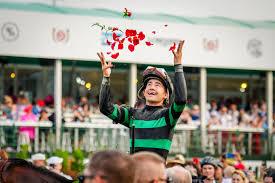
The Derby’s chaos factor comes from the field size and the track position. Up to 20 horses can break from the gate, meaning traffic trouble and tough trips are almost guaranteed. Favorites still do win with some regularity, but they’re often overbet relative to their true chances. That’s why many serious players look to mid‑range odds horses – those between 6‑1 and 15‑1 – as the best blend of probability and payout.
Beyond the odds, the Derby is a numbers machine off the track. Handle – the total amount wagered – routinely pushes into the hundreds of millions of dollars worldwide, while the race itself lasts about two minutes. That combination of massive betting volume and a tiny time window makes it one of the most valuable sports TV products of the year. Every fraction on the tote board is part of a larger picture: how much money the public is willing to risk on a single lap around the Churchill Downs track.
If you’re a fan who only bets once a year, the goal isn’t to become a professional handicapper overnight. It’s to understand what you’re actually buying when you take 9‑2 versus 10‑1, why your 2‑dollar bet on a longshot can feel like a lottery ticket, and how the crowd’s money shapes the odds you see. Once you can read the board, the Derby stops looking like random chaos and starts looking like what it really is: a market, with every odds line telling you a story.