

The Kentucky Derby looks deceptively simple from a distance. Twenty horses enter, one horse leaves with the roses, and the entire drama is over before some viewers have settled into the couch. But the race is one of the most demanding strategic puzzles in American sports, because it asks lightly raced 3‑year‑olds to handle a crowd, a distance, and a field size they rarely encounter anywhere else. Behind every Derby starter is a web of breeding decisions, prep races, owner investment, trainer planning, jockey judgment, and pure luck.
Inside the Two Minutes: Horses, Humans, and High‑Stakes Strategy at the Kentucky Derby
Start with the horses themselves. The Derby is restricted to 3‑year‑old Thoroughbreds, which means every contender gets exactly one shot at the race. That restriction is central to the event’s mystique because it turns every spring into a single‑season quest rather than a multi‑year rivalry. An NFL team can reload after a playoff loss and a college basketball power can come back next March, but a Derby horse ages out before it ever gets a second chance. The race does not reward longevity; it rewards perfect timing.
Getting to Churchill Downs now requires navigating the Road to the Kentucky Derby, the points‑based qualification system used to determine the field. Horses earn points through designated prep races, with the biggest totals generally reserved for late winter and spring stakes that serve as final exams before Louisville. This format has changed how connections campaign promising horses, because the goal is no longer simply building prestige through scattered stakes appearances. Owners and trainers now have to think in terms of points accumulation, development curve, and peaking at exactly the right moment, all while protecting a young horse from overexposure.
That development process begins long before the public knows a horse’s name. Breeders and buyers study bloodlines for clues about distance ability, surface preference, maturity, and temperament. A colt with elite sprint breeding may look brilliant as a 2‑year‑old but still raise doubts about whether he can handle 1 1/4 miles on dirt against pressure from every side. A more stamina‑oriented pedigree can inspire confidence on paper, yet the Derby rarely gives horses the clean trip needed to let theory unfold neatly. That disconnect between pedigree logic and race‑day chaos is one reason the Derby remains so attractive to handicappers.
Ownership has changed almost as dramatically as qualification. The old image of horse racing centered on dynastic farms, iconic silks, and singular family stewardship, and that world still echoes through names such as Calumet Farm in Derby history. But the modern ownership structure is often more fragmented, with partnerships, syndicates, and investor groups sharing the cost of purchase, training, veterinary care, and travel. The appeal is obvious: spreading risk across multiple stakeholders makes it easier to chase a Derby dream in a sport where the margins between stardom and loss are razor‑thin.
That ownership model also changes the human story around the race. Instead of one owner waiting outside the paddock, a Derby horse may represent a coalition of businesspeople, racing partnerships, and farm interests from several states. Those groups still need a trainer to shape the campaign and a jockey to execute under pressure, but the road to Churchill Downs has become more collaborative and, in many ways, more corporate. The Derby remains romantic on the surface, yet beneath that surface, it increasingly looks like a modern high‑stakes investment vehicle with a sports ending.
Trainers live in the space between those two realities. Their job is to build fitness without dulling speed, sharpen professionalism without draining enthusiasm, and expose a horse to enough competition to prepare it for the Derby without leaving the best race behind in Arkansas, Florida, Louisiana, California, or New York. The right trainer is equal parts conditioning expert, psychologist, scheduler, and risk manager. Derby history rewards those who understand that the race is as much about managing immaturity as maximizing talent.
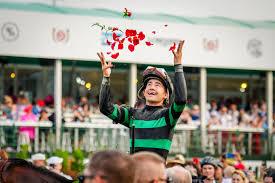
Jockeys carry a different burden. The Derby gate is loud, crowded, and unforgiving, and the opening break can ruin a contender before the first turn even arrives. A horse that breaks half a step slow may be swallowed by traffic, forced to eat kickback, or pushed into a position that negates its natural running style. A rider who asks too early can leave nothing for the stretch, while one who waits too long may discover there is no lane left to take. In a typical American stakes race, a horse may face eight or nine opponents; in the Derby, the traffic density alone turns every decision into a risk.
Post position matters because it shapes that early puzzle. Since 1930, the gate now known as Post 5 has produced more winners than any other stall, while the rail has gone decades without a Derby winner and remains one of the most psychologically difficult draws in the race. That does not mean the inside automatically kills a horse or the middle gate guarantees success, but it does mean the Derby asks riders to solve geometry in motion. The first quarter‑mile is less a test of raw speed than an argument over space.
Running style adds another layer. Front‑runners try to seize control early and hope they can ration speed long enough to survive the stretch. Stalkers sit just behind the pace and often offer the most reliable Derby profile because they avoid the worst traffic without needing the lead. Deep closers can thrill the crowd with a late charge, but they are also vulnerable to congestion, wide trips, and the simple reality that Churchill Downs does not always open a clean path at the exact moment a horse needs one. Derby handicapping is often less about identifying the fastest horse than identifying the horse most likely to get a trip that matches its strengths.
The record book reinforces how hard that can be. Secretariat’s 1:59.40 remains the race standard, a number no Derby winner has matched since 1973. Jockeys Eddie Arcaro and Bill Hartack share the record with five wins each, while trainer Ben Jones built his legend through six victories, most of them for Calumet Farm. Those marks endure because the Derby resists repetition. Great horses are rare, but even great horses need a clean break, a manageable pace, the right post, and a fearless ride to turn promise into roses.
That is why the Derby feels so different from a normal sporting event. It is not simply a championship game for the best horse. It is a one‑shot exam in which preparation, pedigree, ownership ambition, and tactical nerve collide in front of roughly 150,000 people and a national television audience that can peak above 20 million. The horses may be the stars, but the real story of the Kentucky Derby lives in the network of humans trying to guide one young animal through the most unforgiving two minutes in racing.