

Stop pretending a playoff seed is why you scream at your television on Black Friday. Ole Miss fans weren’t thinking about bracket position in 1926, when they stormed the field in Starkville to tear down the goalposts. Mississippi State students answered with wooden chairs, and the brawl produced the Golden Egg. A trophy shaped like an egg exists because two schools couldn’t stand each other, and nearly a century later, the feeling hasn’t changed.
They’re Coming for Rivalry Week: Why a 24-Team Playoff Can’t Kill the Hate
Now college football is about to test that feeling. Yahoo’s Jay Busbee argues that a 24-team playoff will turn rivalry games into “nothing more than a seeding mechanism”. He’s right about the math, and the math is not what brings people to the stadium. A bigger bracket can change what a game is worth to a committee. It can’t change what it’s worth to the people who show up.
What a Bracket Is Worth Right Now
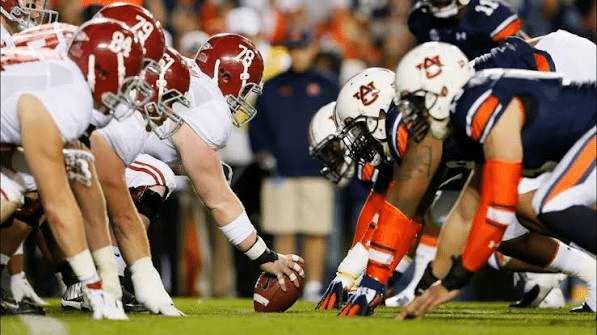
This weekend shows how real the stakes can be under the current 12-team format. Texas visits Texas A&M with a top-four spot to protect, and Alabama hosts Auburn needing ground to make up. UCLA’s chance of making the field swings from about 24 percent to 71 percent depending on its game against USC. Those are real consequences.
But look at who else is playing. Georgia is 10-1 and locked into the SEC title game, so its game against Georgia Tech is a formality. Ohio State and Michigan are playing for nothing the committee cares about. CBS called their game the “Salvage Bowl,” and Axios Columbus noted that it won’t decide a championship but still matters. One writer asked what the rivalry means when there is nothing else to play for. The answer was pride.
The Games That Prove It
Pick any rivalry, and the case builds itself. The Egg Bowl has produced 123 meetings, the 1983 “Immaculate Deflection,” and a cowbell ban that lasted 36 years. In 1997, Tommy Tuberville went for two instead of settling for a tie and won 15-14. Ed Orgeron lost his job after blowing a 14-0 fourth-quarter lead to State in 2007.

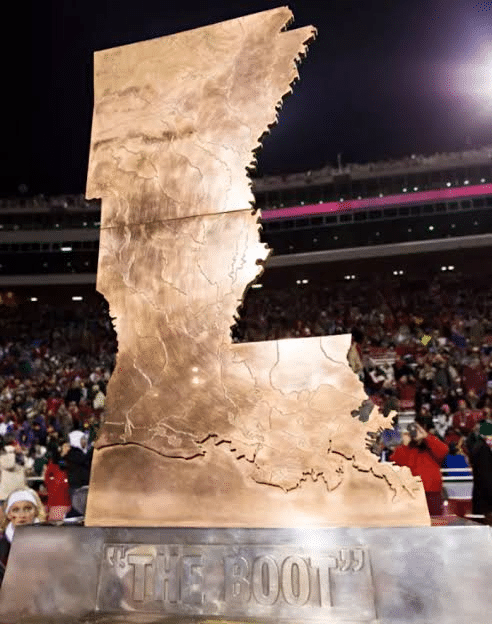
Then there’s the Golden Boot, where LSU (6-5, 3-5) visits Arkansas with a disappointing season behind it. Five of the last six meetings were one-score games. Neither side is chasing a bracket, and the game still draws a crowd.
A 24-team field would change what those games are worth on paper. Busbee notes that four-loss teams like Ole Miss and Florida could be chasing a spot in that field. A team that doesn’t need the win would still want it, and that’s why the sport works.
The Real Threat to Rivalry Week
The danger isn’t that a bigger playoff makes the games meaningless. Busbee points to something quieter. Realignment has already moved famous rivalries off their traditional dates, and a big enough payout could move more. A rivalry is a date, a place, and a trophy. Take away the date and the place, and you get a game with a famous name and none of its power.
That is what fans should fight for. Seeding is something a committee can adjust. A Thanksgiving-week date, a trophy, and a century of grudges are not.
The Final Word
Go ahead and expand the bracket to 24 teams, or 48, or 128. On Black Friday, two teams with no playoff hopes will still line up for a gold-plated egg, and a stadium will still lose its mind. A playoff tells you who gets to play in January. A rivalry tells you who gets to talk in November, and November is when this sport is at its best.