
When Charles Huff hired Kevin Decker as Memphis’s offensive coordinator, he signaled a commitment to modernizing and elevating the Tigers’ offensive identity. Decker isn’t just a good play caller; he is one of the most dynamic offensive architects in college football, a coach widely respected for his adaptability, creativity, and ability to maximize talent at every stop. His presence immediately raises the ceiling of Memphis’ offense and gives the program a system capable of closing the gap with the AAC’s top units. For fans eager to understand how the Tigers will evolve under Decker, it begins with three core themes: conflict creation, versatility, and player empowerment.
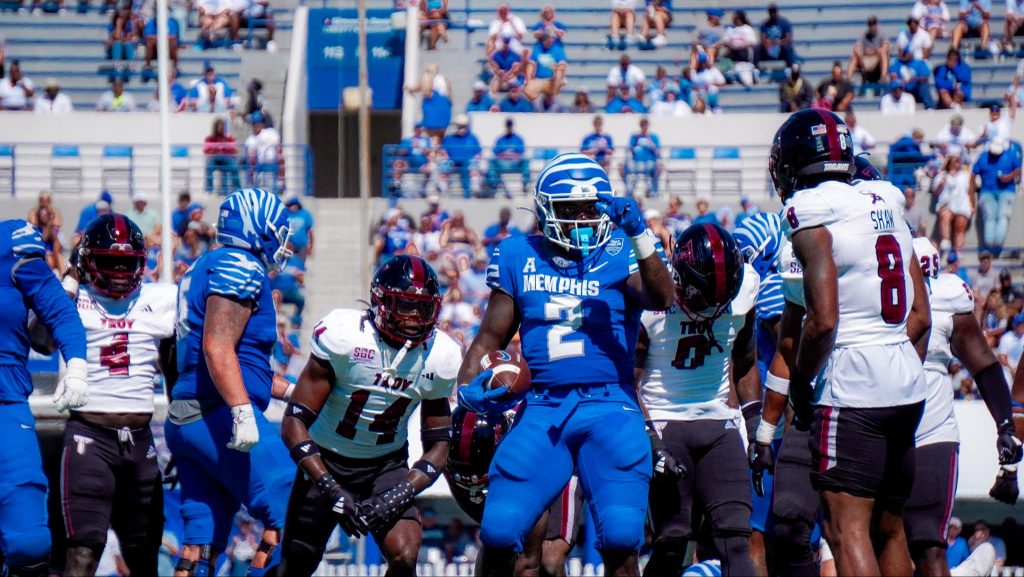
Decker’s entire philosophy revolves around forcing defenses into uncomfortable decisions. He uses pre-snap motion, unbalanced formations, and shifting alignments to test how defenders react. Every snap becomes a diagnostic tool; if linebackers hesitate, the run game attacks them. If safeties cheat forward, the passing game targets deep zones. If corners play soft, quick-game concepts open up. Defenses cannot sit still against a Decker offense because nothing stays the same for long. His system manipulates leverage, stretches the field horizontally and vertically, and punishes even minor mistakes in alignment. Memphis fans will see an offense that looks unpredictable, exhausting, and explosive.
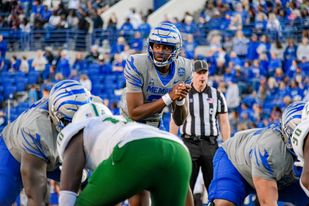
Quarterback development is at the center of Decker’s model. He wants quarterbacks to be decision-makers, not robotic operators. His training focuses on understanding defensive structure, identifying weak points, and using progression-based reads that unleash the quarterback’s full potential. Memphis quarterbacks will learn protections, route adjustments, and tempo shifts. They will be taught to alter plays at the line of scrimmage based on defensive cues. Decker empowers his quarterbacks with autonomy; the more they understand, the more dangerous the offense becomes. This empowerment transforms the quarterback position into the engine of the entire operation.
But Decker’s offense is far more balanced than its reputation. His run game is intentional, physical, and foundational. He mixes inside zone, outside zone, gap-scheme counters, and read options to keep defensive fronts guessing. Linemen must play with tempo, communication, and frequent movement, but the schemes are efficient and repeatable. Running backs thrive because Decker creates conflict at the second level, opening lanes that reward patience and explosiveness. Memphis has long been known for strong running back play, and under Decker, that tradition has room to surge again. For a coach like Huff, who values physicality, Decker’s run game strikes a perfect balance of finesse and force.
The passing game reflects Decker’s mastery of spacing and timing. He uses layered route concepts that stretch defenses vertically while simultaneously flooding zones horizontally. Slot receivers often become volume weapons, exploiting mismatches against linebackers and nickelbacks. Outside receivers benefit from double moves, isolations, and deep play-action shots that punish defenses for overcommitting to the run. Memphis receivers, known for athleticism and toughness, will find a system that rewards separation, creativity, and yards after catch. Decker teaches details: stem work, leverage manipulation, and timing precision, ensuring receivers maximize every snap.
Tight ends play a uniquely important role in Decker’s scheme. Far from being purely blockers or occasional targets, they become essential chess pieces. They shift across formations, block on the edge, leak into open zones, and create mismatches against slower defenders. A versatile tight end expands Decker’s playbook dramatically, giving Memphis options on third down, in the red zone, and in play-action concepts. This versatility forces defenses to defend the entire width and depth of the field.
Up front, the offensive line is coached to play with controlled aggression. Their movements must sync with the shifting formations and tempo changes. Decker’s offense requires communication, intelligence, and physicality. Linemen are taught to recognize fronts quickly and to use angles to create leverage advantages. The result is a line that plays faster, smarter, and more connected.
Recruiting under Decker reflects his system’s strengths. Quarterbacks gravitate toward innovative coordinators, and Decker’s reputation as a teacher gives Memphis a competitive edge. He can sit in a living room and show a recruiting film of quarterbacks thriving under his guidance. Running backs love his gap-manipulating run game. Receivers want to play in a scheme that moves them around, feeds them targets, and helps them develop NFL-level route discipline. Tight ends see a coordinator who actually features them. Offensive linemen recognize that his system elevates their visibility as well.
Decker also brings the ability to adapt personnel to schemes. If Memphis is built with a big, physical line and a workhorse back, the offense can lean run-heavy. If the roster has speed and vertical threats, the passing game expands. If the quarterback is a dual-threat runner, the option game becomes central. Decker doesn’t force players into a predetermined identity; he adapts his identity to his players.
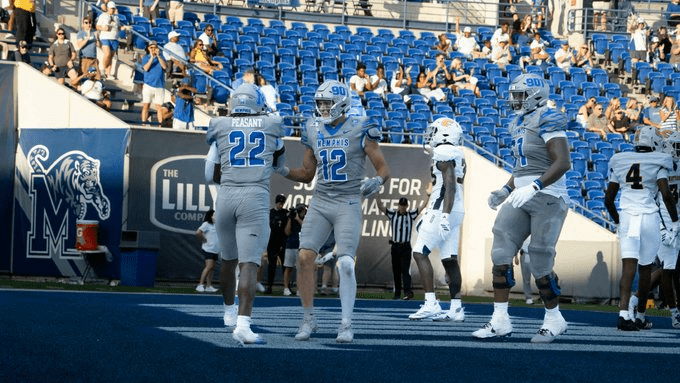
Just as important is Decker’s ability to complement Huff’s values. Huff demands toughness, detail, and accountability. Decker brings creativity, autonomy, and innovation. Together, they blend physical football with modern schematics.
The result: a Memphis offense capable of closing the gap through discipline, explosiveness, and design, not just talent alone.