
Deion Sanders has spent his entire football career in worlds where time is money and mistakes come with a price. Now he is trying to drag college football into that reality. In Colorado, his newly unveiled “financial accountability” system is the clearest attempt yet to run a college program like an NFL franchise—only without the one thing that makes pro discipline legitimate: collectively bargained player power.
What Exactly Is Colorado’s Fine System?
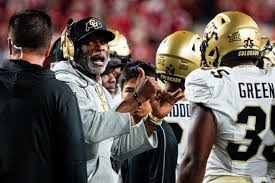
The numbers themselves grab you. Being late to a meeting or film session carries a fine of hundreds of dollars. Miss the entire session, and it jumps into the thousands. Show up late to practice or strength and conditioning? Same story. Cross the line on social media or embarrass the program in public, and the penalties can reach five figures. These aren’t token wrist slaps; they are designed to sting and aimed squarely at players’ NIL money, not their playing time.
This system sends a blunt message: your behaviour has a direct dollar value. Instead of only running hills, losing reps, or getting chewed out in front of the team, players now feel the consequences in their bank accounts. For a generation that finally gained access to legitimate income through NIL, having that new revenue tethered to punctuality and conduct is a dramatic shift. It takes what used to be “team rules” and transforms them into an itemized bill.
Why Sanders Turned to Financial Discipline?
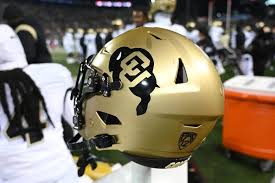
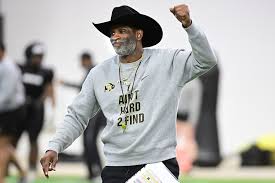
To understand why Sanders would even go there, you have to look at the environment he helped create. Colorado under Coach Prime is part football team, part content machine, part cultural spectacle. The roster churns through the transfer portal. NIL dollars flow in from collectives and sponsors. Expectations are national. After a 3–9 season, Sanders clearly concluded that talent and attention weren’t the issue—discipline and professionalism were. A fine system is his way of saying, “If you want pro money, you will live by pro standards.”
There is also an image component that can’t be ignored. Sanders has built his brand on accountability, toughness, and a pro‑style mentality, and this fine sheet is as much a billboard as it is an internal document. It tells recruits, parents, donors, and television audiences that Colorado is not just selling flash—it is selling structure. Whether that structure is fair or sustainable is another discussion, but in Sanders’ world, it reinforces the idea that Colorado is serious about operating at a professional standard.
The NFL Blueprint Without the NFL Safeguards
In the NFL, that message fits inside a structure everyone understands. Fines are grounded in a collective bargaining agreement. Players know the schedule, understand the appeal process, and have a union standing behind them. Even when players grumble, the system exists inside a negotiated framework that recognizes them as workers with rights. The money is big, but so is the voice that players have through their union.
College football doesn’t have that scaffolding. On paper, these athletes are still “students,” not employees. They do not have a union. They do not sit across the table from universities and hammer out a deal. When a coach imposes financial penalties in that environment, it borrows the optics of the NFL without any of the shared governance that makes those fines legitimate. The result is a discipline system that looks professional but rests on amateur‑era power dynamics.
The Contract Question: Where Do These Fines Live?
For these fines to be more than a scare tactic, they have to live in the paperwork. That means clear language in either the scholarship documents or, more likely, in NIL agreements that players sign. If the fine structure is buried, vague, or dropped on them after the fact, it starts to look less like agreed‑upon terms and more like unilateral punishment. Courts have never been fond of private contracts that function like punishment rather than payment for services. Clarity and timing matter as much as the dollar amounts.
There’s also a practical layer: most college athletes are not reading their agreements with a team of lawyers. They rely on trust, family advice, or an agent who may be focused primarily on getting the deal done. If a fine schedule is technically “in the contract” but never meaningfully explained, the spirit of consent is questionable. It raises the question of whether players truly agreed to these financial penalties or simply signed on to something they didn’t fully understand under pressure to secure their spot and their money.
NIL Money, Third Parties, and Control
There’s also the question of whose money this actually is. Much of the NIL cash doesn’t come from the university but from third‑party collectives and businesses. That creates a three‑way triangle: the player, the entity paying him, and the coach or program trying to control the flow. When a coach dictates that certain amounts be withheld for team violations, he is reaching into a deal he didn’t sign, between parties that may not have tied that money to team conduct at all. It is one thing to hold a roster spot over a player’s head; it is another to reach into his off‑field paycheck.
Layered on top of that is the fragile line between NIL and pay‑for‑play. NIL was supposed to compensate athletes for their marketable persona—endorsements, appearances, content, autographs—not for whether they showed up to a 6 a.m. lift on time. When you start docking NIL money for football‑related behaviour, even under the banner of “culture,” you are sliding dangerously close to using that money as a performance and participation incentive. That’s the very territory college sports has insisted it would avoid, and blurring that line invites regulatory and legal headaches down the road.
What Happens When a Player Pushes Back?
Then there is the practical question: what happens when someone refuses to pay? A backup fighting for snaps may simply accept the fine as a cost of survival. A star with a strong NIL portfolio and a lawyer on speed dial might not. If a player pushes back, any attempt to enforce the deduction becomes a test case: Can a college program, dealing with non‑union athletes it insists are not employees, legally punish them financially for internal team violations? The moment a player challenges the system, the gap between “team rule” and “contractual obligation” becomes critical.
Until that moment comes, the system functions largely on leverage and fear. Most players don’t have the resources, time, or appetite to wage a legal fight against their own program. They are teenagers and young adults trying to stay on the field and on draft boards, not experienced professionals who understand every line of their contracts. The power imbalance is built into the model. That imbalance means many fines will likely go uncontested, not because they are unquestionably fair, but because the cost of resistance feels higher than the cost of compliance.
The Bigger Picture for Non‑Union College Athletes
The broader implications for college athletics are hard to ignore. If Colorado’s experiment produces what coaches crave—fewer distractions, tighter habits, maybe a few more wins—others will be tempted to copy it. What begins as “Coach Prime being Coach Prime” can quickly become industry standard. Once that happens, NIL money becomes more than a long‑overdue slice of the revenue pie; it becomes a disciplinary tool. Programs across the country could quietly adopt similar systems, pointing to Colorado as proof that it “works.”
That turns the original promise of NIL on its head. This era was marketed as the athlete’s liberation: finally, the quarterback and the cornerback could cash in on their own name, image, and likeness. But when that same money is used as a leash, the freedom is conditional. The school and its backers may not cut the check directly, but they gain de facto influence over what happens when a player crosses an internal line. Over time, that could normalize a world where players are financially punished without ever gaining the formal rights that usually accompany that kind of control.
Are We Watching the Sport Edge Toward True Professionalism?
Right now, college football has all the pressures of a professional enterprise—national television deals, massive donor involvement, coaches making eight figures—but very few of the worker protections that define modern pro sports. Sanders’ fine system exposes that gap in a way that is impossible to ignore. It is, intentionally or not, an argument for treating players like employees in every sense, not just when it is convenient for coaches. The closer the sport drifts toward a workplace model, the harder it becomes to defend the idea that athletes are just students.
If this model becomes common, it will only strengthen the case that college athletes function as employees: they are paid, they are scheduled, and they are disciplined financially for failing to meet workplace‑style expectations. The more programs lean into that reality, the harder it becomes to maintain the fiction that these are purely students engaged in an extracurricular activity. Deion Sanders is not the first coach to demand accountability, and he won’t be the last. But by tying dollars to discipline in such explicit fashion, he has done more than just post a fine sheet on a meeting‑room screen—he has forced the sport to confront an uncomfortable question: if college football is going to be run like the NFL, how much longer can it pretend that its players are anything but professionals without the power to say no?