
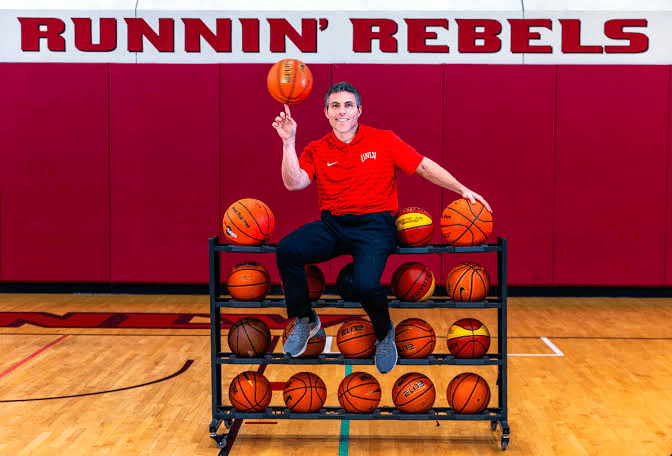
In a year where everything in college sports feels louder, harsher, and more transactional, Josh Pastner is quietly building something very different in Las Vegas.
Josh Pastner Is Coaching in 2026 Without Cussing — And He Thinks It Might Actually Save Lives
On Conference Crunch, the UNLV head coach didn’t just talk about schemes and recruiting. He went straight into a topic most shows still tiptoe around: mental health. “Mental health is on the forefront of everybody’s… not only in the world of sports but in every line of the day,” Pastner said, framing it as an issue that sits above wins, losses, and even jobs. In his mind, if you’re coaching today and you’re not actively thinking about mental health, you’re behind — not just as a coach, but as a human being.
“I Am Not A Mind Reader, And I’m Not A Psychologist”
At UNLV, he explained, there isn’t a casual, once‑a‑semester reference to resources buried in a handbook. “We have a sports psychologist… we have a few of them in our athletic department, and they are available to our student‑athletes at all times,” Pastner said. That access is part of the program’s fabric, not an afterthought. Yet he’s crystal clear about his own role. “I am not a mind reader, and I’m not a psychologist,” he tells his players. They can talk to him about anything; his door is open, he wants to be a “sounding board,” but he refuses to pretend he’s trained for some of the deeper things young men are carrying in 2026. That honesty is itself a protective measure; it pushes players toward professionals who have “gone to school and handled all that” when the weight gets heavy.
Pastner laid out the difference with sharp detail. Basketball questions — “why am I not getting more shots,” “why am I not coming off the pin down on this play” — are fair game. He’ll talk, he’ll explain, he’ll coach. But when players feel pressure, have things “going on at home,” or face deeper mental struggles, his message shifts. “We really encourage, and I’m constantly encouraging them to seek professional help,” he said, emphasizing that nothing shared with the sports psychologists can come back to him. Even if a player vents about the head coach himself, that information is protected. In a profession where players often worry that vulnerability will be used against them, Pastner is trying to build a protected lane where they can actually speak.
It isn’t just about therapists, though. Pastner believes in basic habits as mental health tools — and he practices what he preaches. He talks about sharing, expressing how he feels, “talk[ing] things out with people” as something that helps him personally. He points to exercise in simple terms: staying active, even “just going for a walk,” matters. For a coach who lives in a results‑driven world, who knows his job is tied to wins, losses, and “what have you done for me lately,” these habits are part of how he tries to keep himself and his players from getting swallowed by the pressure.
Why His Players Never Need Earmuffs In A Huddle
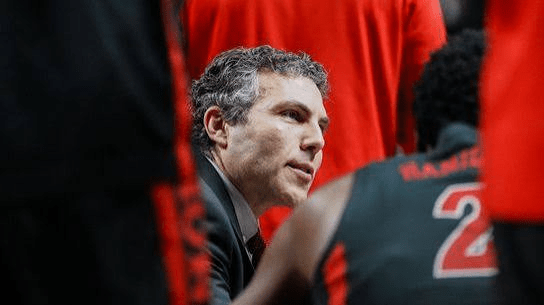
Then there’s his language. Pastner made it clear: “I do not use any foul language. I don’t allow our staff to use any foul language. I don’t use [it to] the player. Nope. We nip that in the bud.” In an era where sideline audio often sounds like a bleep‑filled war zone, he’s drawing a hard line. He jokes about his go‑to phrases — “Jimmie Christmas,” “You’ve got to be kidding me,” “You’re not more ready to play than the man on the moon,” “You’re killing the grass, you got to keep moving,” and the classic “Come on you get your rear end going, let’s go” — and admits they sound elementary. But he likes that a wife or child could sit in his practice, be in his huddle, and “not have to put earmuffs on.”
For Pastner, the choice isn’t about being soft. It’s about removing one more obstacle between the message and the person. “The nice thing about when you’re coaching strictly about performance and not making it personal… when you use foul language, that line can get crossed, and people cannot hear the message; they just hear the language,” he explained. The second a player feels attacked or disrespected, the coaching point evaporates. All they remember is the sting. “Keeping discipline with your words” is mental‑health work too, he argued, because it keeps the focus on performance instead of spiraling into something personal and damaging.
His approach has turned into a broader proof point. “Josh Pastner is proof that you can coach at a high level, you can develop, and you can motivate young men without screaming, without cussing and without drinking Coca‑Colas,” he was told on the show — and he didn’t shy away from that description. “You can be at a high level and be successful and not have to change your values or principles along the way,” he said. That’s the line that ties everything together: the psychologists, the open door, the clean language, the emphasis on exercise and sharing. It’s a full philosophy about how to coach and live in 2026.
In a sport that often celebrates the toughest‑sounding voice in the room, Pastner is betting on something quieter, more deliberate, and ultimately more human. The pressure isn’t going away. The results‑driven world will keep spinning. But by refusing to cross certain lines and by building real support systems for his players, he’s making a different argument — that winning and caring about mental health aren’t mutually exclusive. And in a year where the noise rarely stops, that might be the most important message to come out of a basketball show all season.