
Florida didn’t just lose a super regional on Sunday — it lost the benefit of the doubt. In a winner‑take‑all Game 3, the Gators were run‑ruled 16–7 by Texas Tech, but the scoreline is almost an afterthought beside the images that will define this weekend: former Gator Mia Williams being hit by Florida pitching for the fifth time in three games, head coach Tim Walton getting tossed late, and a Florida team that walked straight off the field without so much as a handshake for the Red Raiders.
Five Bruises, No Handshake: How Florida Softball Turned a Super Regional Into a Culture Crisis
That is not bad luck. That is a program‑culture moment, live on national television.
When “Pitching Inside” Becomes the Story
Every staff in big‑time college softball wants to own the inner half of the plate. Every hitter knows they’re going to wear one occasionally when pitchers challenge in tight. One hit‑by‑pitch on a former player in a charged super regional? That’s part of the game. Two starts to raise eyebrows. Five over three games, all on the same hitter, in her return to Gainesville? That becomes the headline.
Williams didn’t just endure those plunks; she played through them and still found ways to hurt Florida, both on the basepaths and at the plate. Each bruise added another layer to the tension between dugouts and in the stands. At some point, this stopped looking like “we’re just trying to back her off” and started looking like a staff that either couldn’t command the ball or wouldn’t change its approach.
Softball people can argue mechanics and intent all day, but the bigger point is simpler: when you repeatedly put a former player in harm’s way on this stage, you are responsible for the optics as well as the outcome. Florida never truly adjusted. That is not just a strategy problem; it’s a leadership one.
This Is Tim Walton’s Culture, for Better and Worse
Tim Walton is not some interim figure trying to stabilize a program. He is Florida softball. He built this thing, stacked the wins, raised the trophies, and created the expectation that the Gators should live in Oklahoma City every June. With that level of control comes an unavoidable truth: everything that happens under this banner is a reflection of him.
So when a super regional featuring a former Gator devolves into multiple hit‑by‑pitches, a heated environment, and ultimately Walton himself being ejected, that’s not just an emotional moment — it’s a culture checkpoint. You can coach with an edge. You can demand that your team refuse to back down. But when that edge routinely spills over into scenes that overshadow the actual softball, the line has been crossed.
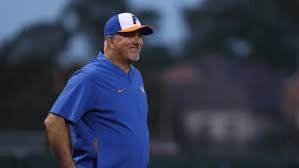
The decision not to participate in the postgame handshake line is the clearest example. That handshake isn’t a meaningless ritual; it’s the sport’s built‑in reminder that there’s something bigger than the scoreboard. Walking off instead of lining up is a choice. It’s a message to your players, to your opponent, and to everyone watching: we’ll compete, but when we lose, we’re not interested in sharing the moment. That reflects directly on the man in charge.
Walton gets the credit when Florida plays with swagger and refuses to blink in big moments. He also has to take the hit when that swagger looks like pettiness, when “compete” becomes “come unglued,” and when the most lasting images of a season are about behavior, not ball.
The Pitching Coach Isn’t Just Along for the Ride
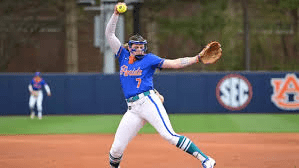
At the same time, it’s impossible to talk accountability without talking about pitching coach Stephanie VanBrakle Prothro. She wasn’t brought in to be a figurehead. She was hired to design this staff, to elevate it, and to manage it pitch‑to‑pitch on the biggest stages. When the same hitter gets plunked again and again in the same series — and not just any hitter, but a former Gator in an emotional super regional — it’s fair to ask what changed, and whether anything did.
Pitching inside to a hitter like Williams is defensible. Continuing to let her wear pitches without noticeably adjusting the plan is not. There are a dozen ways to attack a dangerous right‑handed bat: climb the ladder, expand off the plate, change speeds, and change eye levels. If the only adjustment is “hope we stop hitting her,” that’s not a plan; that’s stubbornness.
This is where culture and coaching intersect. A staff that feels empowered to “send a message” may be more willing to live dangerously inside. A staff that fears deviating from the original script may be slower to adjust, even as the situation clearly demands it. Either way, it’s on the adults in charge to read the room, read the moment, and protect both their players and the program’s reputation. On that front, Florida failed.
The Loss They’ll Feel Long After This Weekend
Texas Tech earned its spot by hitting, grinding, and leaning on a former Gator who refused to be rattled. Florida, meanwhile, leaves this postseason with more than just a scoreboard beating. It leaves a trust problem. Opposing fan bases will remember the way this weekend looked. Opposing coaches will remember how this staff handled a former player on a national stage. Recruits and their families will absolutely remember which program chose to walk off without a handshake when things got ugly.
That’s the real damage here. Seasons end. Super regionals are won and lost. But the film from this weekend will live on as a snapshot of who Florida softball was when the lights were brightest, and the emotions were rawest: five plunks, an ejected head coach, no handshake.

You can call that passion if you want. You can spin it as “we play with an edge.” But the game has its own way of separating edge from excuse. Florida just found that out the hard way. Unless Tim Walton and his staff are willing to own this moment and reset the standard, this won’t be remembered as a one‑off meltdown. It will be remembered as the day the culture got exposed.