

Closing the gap in college football is never about one breakthrough moment. It’s about building the kind of program where winning becomes routine, where discipline becomes instinctive, and where excellence becomes the expectation rather than the aspiration. When Charles Huff accepted the Memphis job, he understood that narrowing the gap between Memphis and the sport’s standard-setters meant establishing a championship standard, not just during games, but every day, in every room, with every player. Memphis has experienced success before. What the Tigers now seek is sustainability, and Huff’s plan revolves around building a standard strong enough to withstand pressure, adversity, and the constant churn of modern college football.

That standard begins with the smallest details. Huff believes winning is a product of daily habits, not occasional flashes. From the moment players walk into the building, their mindset is evaluated. Are meetings attended early or simply on time? Are workouts performed with intent or just completed? Are players communicating, correcting, and pushing each other, or merely going through motions? Championship programs are built from layers of discipline, stacked day after day. Huff demands that players take ownership of every inch of their preparation, hydration, recovery, weight training, nutrition, and film study. Nothing is too small to matter, because everything compounds.
Physical development is another pillar of the championship standard. Huff’s year-round strength and conditioning model mirrors the NFL approach: individualized training built around positional demands. Offensive linemen must anchor and drive with consistency. Linebackers require lateral quickness and explosiveness. Receivers need top-end speed and stamina. The goal is not just raw strength, but functional power that translates to Saturdays in November, when legs get heavy and the season’s wear accumulates. Huff wants Memphis to finish games fresher than opponents. Physical dominance is not an accident; it’s the result of coordinated, intentional development.
But physicality means nothing without discipline. Championship defenses rarely make mental mistakes. Championship offenses rarely waste drives with self-inflicted errors. Closing the gap requires eliminating the penalties, blown assignments, and communication gaps that cost games in critical moments. Huff’s staff charts every detail: alignment, footwork, eye discipline, down-and-distance awareness. Players are evaluated on more than talent; they’re evaluated on reliability. A player who is 95% correct in practice becomes a player Huff trusts in high-leverage moments. A team that plays clean football closes gaps faster than a team that plays recklessly.
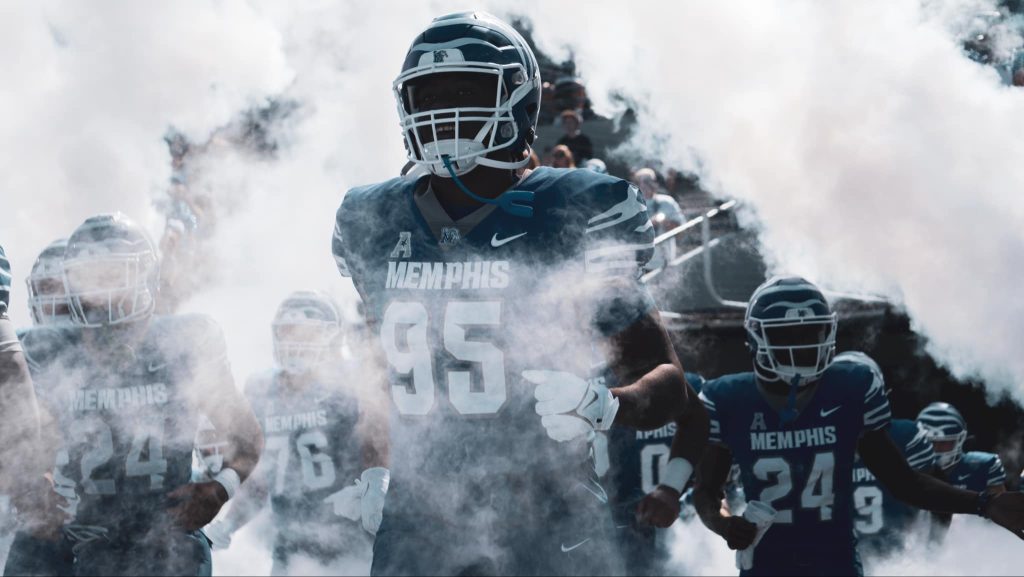
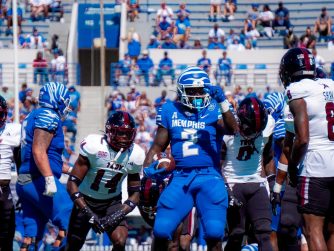
Situational mastery is arguably Huff’s most important focus. Football games turn on a handful of moments: third-and-one, fourth-and-two, red-zone possessions, two-minute drills, goal-line stands. Huff emphasizes these situations as much as anything else. Practices include live reps of the exact scenarios the Tigers will face in conference play. Huff doesn’t want players surprised by pressure; he wants pressure to feel familiar. His message is simple: championship teams don’t rise to the occasion; they fall back on their habits.
Culture forms the backbone of that consistency. Huff builds culture through internal leadership, not external motivation. Leadership councils, peer accountability groups, and mentor relationships create a system where players hold each other responsible. Huff believes successful teams regulate themselves long before coaches step in. Competition is woven into the fabric of every practice. Veteran players teach younger ones the standard. Younger players push older ones for reps. The result is a culture where no one gets comfortable, and no one gets left behind. When culture thrives internally, the program becomes resilient externally.
Another element of building a championship standard is adaptability. Huff does not subscribe to rigid systems. He wants Memphis to win in multiple ways. Against a smashmouth opponent, Memphis must win with physicality. Against a tempo-heavy offense, Memphis must control possession. Against a spread passing attack, Memphis must confuse quarterbacks and disguise coverage. Huff’s adaptability ensures Memphis isn’t boxed into one identity. Closing the gap requires tactical flexibility, the ability to win stylistically neutral or stylistically diverse games.
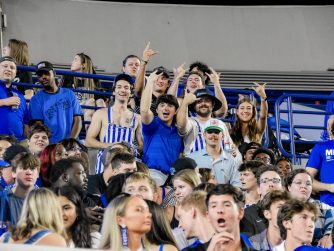
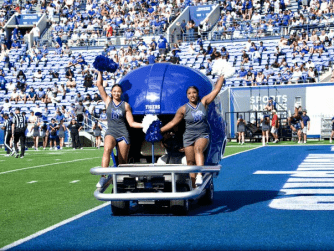
Brand matters too. Championship programs project confidence, visibility, and momentum. Huff elevates Memphis through improved media production, storytelling, and community engagement. Fans feel connected. Recruits feel valued. Alumni feel proud. Momentum extends beyond the scoreboard; it spreads through the city. Renovations to the Liberty Bowl amplify this branding, transforming home games into events rather than experiences. When the stadium roars, when energy builds, when the city aligns behind the program, Memphis becomes a destination for players who want to perform on a rising stage.

Depth is another non-negotiable component of closing the gap. Injuries happen. Seasons grind. But championship teams withstand attrition because they develop more than starters; they develop contributors. Huff’s commitment to roster-wide improvement ensures that Memphis doesn’t fade late in the season. A deep, disciplined roster keeps Memphis competitive when the schedule tightens.
Above all, building a championship standard requires belief, the belief that Memphis can and should compete with anyone. Huff instills that belief through preparation, honesty, and accountability. He wants players to walk onto the field with conviction, not hope. Championship standards replace hope with expectation.
Closing the gap is not a myth. It’s a process. And under Huff, Memphis is building the habits, culture, physicality, and standard needed to transform potential into a sustained reality.