
Art Briles at Eastern New Mexico Is Not a One-Off; It Is a Blueprint for How the Game Dumps Its Baggage on the Smallest Campuses
College Football’s Dirtiest Secrets Don’t Disappear — They Just Go Down a Division
When Power Four Programs Say “Too Toxic” and D-II Says “We’ll Take Him,” Players and Communities With the Least Leverage End Up Carrying the Weight
The Line Bigger Programs Would Not Cross
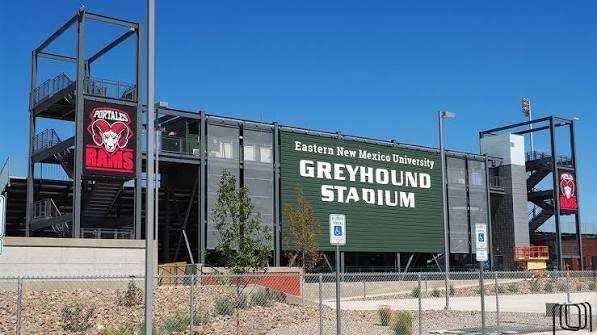
By the time Eastern New Mexico hired Art Briles, the top of college football had already answered one question. No Power Four school wanted to be the one to do it. No high-profile brand wanted to stand at a podium, explain the hire on camera, and pretend it had discovered some fresh moral language for one of the ugliest scandals of the modern college football era. That line held.
The problem is what happened after that. In college football, controversial figures rarely vanish. They drift downward. They move from the bright lights to the shadows, from places where every press conference becomes national news to places where administrators hope outrage fades faster than headlines. That is not an accident. It is a pattern, and Art Briles landing at Eastern New Mexico is one of the clearest recent examples of how the sport exports its worst baggage to the campuses least equipped to carry it.
When a coach becomes too radioactive for the SEC, Big Ten, ACC, Big 12, or even a higher-profile Group of Six role, the game does not always exile him. Instead, it starts looking for a smaller stage. Division II. FCS. NAIA. Somewhere with fewer cameras, less national attention, and a much smaller public-relations blast radius. What is too toxic for a television-first league can suddenly be repackaged as a “second chance” once the audience gets smaller. Briles did not just stumble into that system. He returned through the exact door college football tends to leave cracked for these cases.
That is what makes this more than a one-school story. Eastern New Mexico did not invent the logic behind the hire. It simply acted on it. The calculation is familiar: a lower-division program with limited visibility, finite resources, and pressure to matter in its own region convinces itself that a controversial name is an opportunity bigger programs are too scared to touch. Winning becomes the pitch. Relevance becomes the justification. “Different here” becomes the lie schools tell themselves when they want the upside of a name without fully owning the history that comes with it.
Smaller programs do not operate with the insulation of the Power Four. They do not have full-scale crisis teams, layers of outside consultants, and television partners invested in helping them navigate backlash. They have thinner budgets, smaller staffs, less protection, and often a greater sense of urgency. That matters. When the sport’s heavy moral questions fall down the ladder, they land on institutions that have fewer tools to handle the aftershocks. The same hire a major conference school would reject as a brand and leadership disaster can start to look, inside a smaller athletic department, like a market inefficiency. That is cynical, but it is also how the business works.
Who Pays the Price
The ugliest part is who gets stuck with the consequences. The players at Eastern New Mexico did not choose to become the public face of the Briles debate. Many were not even old enough to fully understand the Baylor scandal when it dominated headlines. They signed up to play football, get an education, and keep a program moving. Now they also inherit the weight of a coach whose name means far more than offense, quarterback development, or wins. The same goes for students, faculty, alumni, and people in that community who had no role in making the hire but still have to live with what the school attached itself to.
That is what makes the “just D-II” shrug so dishonest. A scandal does not shrink because it moves down a division. It just becomes easier for the sport’s most powerful voices to avoid discussing it. The same commissioners, athletic directors, and coaches who spend media days talking about culture, integrity, and student-athlete welfare can suddenly become very quiet when a school outside their immediate lane decides to hire one of the most polarizing figures of the last decade. The message is not hard to hear: if it is not happening on our stage, it is easier to treat it like somebody else’s problem.
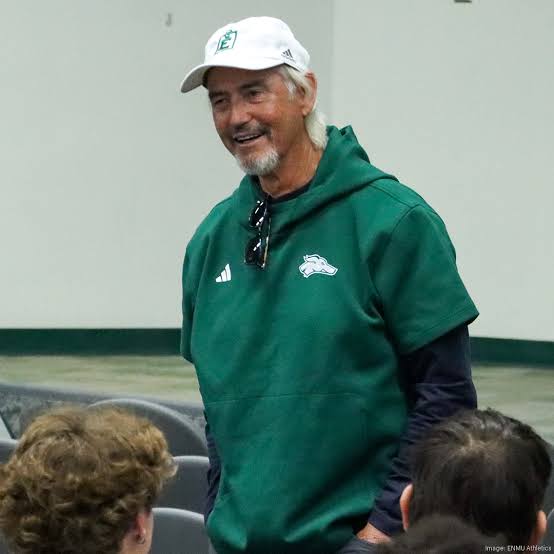
That silence is part of the pattern too. Briles’ attempted return at Grambling State in 2022 collapsed in only a few days because the backlash was immediate and loud. That moment made it look like the college game had a clear line. In reality, it just revealed the sport’s unwritten rule: not here, not this visibly, not if the blowback is this strong. That is very different from saying never. It leaves room for the next school down the ladder to decide the cost-benefit equation looks different in its own building. Eventually, one of them always does. Eastern New Mexico did.
This is not unique to Briles. Sports history is full of people who became too difficult for the top of the ladder and reappeared lower down, where the scrutiny softened and the desperation to win felt sharper. Not every case is identical. Not every return involves a scandal this severe. But the mechanism is familiar. The further you move from the national spotlight, the easier it becomes for institutions to convince themselves they can carry a burden that others would not touch. Sometimes they call it redemption. Sometimes they call it opportunity. Often, it is really just the sport relocating a problem instead of resolving it.
And that is the real point here. Eastern New Mexico did not solve a moral puzzle. It inherited one the sport never finished. Baylor fired Briles in 2016 after one of the most damaging scandals in recent college sports history. The NCAA later criticized his “incurious attitude” toward potentially criminal conduct and said he failed to meet even the most basic expectations of how someone should react to that kind of information. None of that disappeared. It simply sat unresolved long enough for a smaller school to convince itself that enough time had passed.
That is the blueprint. Bigger programs keep their distance. Smaller schools absorb the risk. Players and communities with the least leverage carry the weight. Then the rest of the sport watches from afar and pretends this was some isolated local choice rather than the predictable outcome of a system that still has no clear answer for what disqualifying failure actually looks like.
Briles at Eastern New Mexico is not just a comeback story. It is a map of how college football handles its dirtiest secrets. They do not vanish. They just go down a division.