
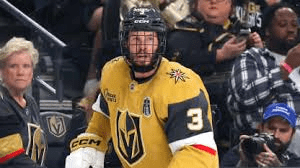
Watching Game 3 of the 2026 Stanley Cup Final in Las Vegas broke every rule we think we know about momentum. The Vegas Golden Knights sprinted out to a 4–0 lead and looked ready to turn the night into a coronation. Then, out of nowhere, the Carolina Hurricanes detonated the game with three goals in 39 seconds, completed a four‑goal comeback to force overtime, and dragged T‑Mobile Arena into double‑OT drama before Shea Theodore finally ended it with a dagger from the point. It was chaos, it was theater, it was everything June hockey promises to be.
Stanley Cup Game 3 Gave Us an All‑Time Comeback. The NHL Used It to Fight a Bigger Enemy.
But for all the madness on the ice, the most important victory of the night didn’t belong to Vegas or Carolina. It belonged to millions of people whose lives have been ripped apart by cancer—and to a league that chose its brightest lights to stand in their corner.
When the Cup Final Becomes a Megaphone, Not Just a Trophy Case
The Stanley Cup Final is more than a series; it’s the one time each year when the NHL truly owns a slice of the wider sports conversation. Hardcore fans, casual viewers, people who haven’t watched a game since last June—this is when they all converge on the same product. That concentration of attention is the league’s most valuable currency.
In the middle of Game 3, the NHL spent that currency on something bigger than itself. Commissioner Gary Bettman appeared on the league’s ASL telecast to announce that this season’s Hockey Fights Cancer campaign raised more than $9.1 million. Over $4.8 million of that is being directed to lifesaving cancer research across NHL markets through a partnership with the V Foundation. Individual clubs contributed more than $3.2 million for local cancer‑related charities, while the American Cancer Society and Canadian Cancer Society added over $1 million through HFC Assist to fund support services like travel, lodging, and day‑to‑day help for patients and families. Together, those efforts have pushed Hockey Fights Cancer past $53 million raised all‑time since its launch in 1998.

What matters is not just that the league shared those numbers, but where and when it chose to share them. This wasn’t a Tuesday night in November or a quiet press release. This was the Stanley Cup Final. This was the middle of one of the wildest games the series has seen in years. By embedding the announcement into that moment, the NHL effectively moved Hockey Fights Cancer from “signature initiative” to “part of our core identity.” On its loudest night, the league chose to talk about cancer patients, survivors, and families—not just goals and saves.
An ASL Broadcast, a Commissioner, and a Community That Refuses to Be Silent
The platform for that announcement was just as intentional as the message. Bettman didn’t simply announce the primary English broadcast. He joined an ASL telecast—coverage created specifically for Deaf and hard‑of‑hearing fans.
That decision matters. Too often, accessibility in sports has been treated as a box to check instead of a cultural priority. When the commissioner brings the league’s biggest philanthropic news to an ASL broadcast, it sends a very different signal: fans who rely on sign language aren’t an add‑on audience, they are part of the main audience. They are meant to be inside the moment, not watching it through a smaller, secondary window.
That becomes even more powerful in the context of cancer. The disease doesn’t just threaten lives; it alters bodies, senses, energy, and the way people communicate. Survivors live with chronic side effects. Families adapt to new physical and emotional realities. Delivering a landmark cancer announcement via ASL is a way of acknowledging those realities instead of pretending the “hockey community” is a narrow, able‑bodied slice of fans.
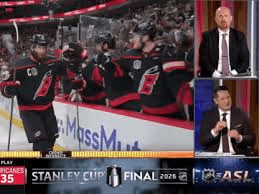
In that segment, the NHL didn’t just say, “We raised millions.” It said, “We raised millions, and we see you. You belong in this moment, too.” That blending of inclusion and advocacy is what separates a cause campaign from a cause culture.
From Theme Night to Lifeline—and Why This Can’t Go Backward
To appreciate the weight of what happened around Game 3, you have to zoom out. Hockey Fights Cancer launched in 1998 as a collaboration between the NHL and NHLPA, long before it was standard for leagues to have dedicated cause months. It began as a series of themed nights: lavender accents in the rink, special warmups, “I Fight For” signs, and pregame ceremonies honoring patients and survivors. Those nights quickly became some of the most emotional dates on the schedule.
Over nearly three decades, the initiative has grown far beyond a night on the calendar. Through its partnership with the V Foundation, Hockey Fights Cancer channels millions each season into targeted research grants. Individual clubs raise money for local hospitals and cancer centers, turning game nights into direct investments in their communities. HFC Assist focuses on the unglamorous but critical costs families face—gas, hotel rooms, meals, and support services that can be the difference between getting treatment and going without.
Now, with more than $9 million raised this season and over $53 million all‑time, Hockey Fights Cancer isn’t just a theme night. It’s a lifeline. It’s a network of researchers, doctors, social workers, and advocates who can point to real programs and say, “Hockey helped fund this.”
Fittingly, the game itself felt like a metaphor for that fight. A 4–0 hole that seemed impossible to escape. A sudden surge of hope. Endless swings in momentum. Double overtime, where every moment felt fragile and decisive. Fans in Vegas lived that rollercoaster over a few hours. Families facing cancer live some version of it every day.
That’s why this night matters beyond the box score. Years from now, we’ll still replay Marner’s goals, Carolina’s furious push, and Theodore’s winner. But we should also remember that, at the height of its visibility, the NHL pointed its spotlight at something that doesn’t fit neatly into a highlight reel.

The Stanley Cup is where legacies are written. Because of what happened around Game 3, part of this season’s legacy will be measured not just in banners and rings, but in research funded, families supported, and lives extended because a sport decided its biggest stage should be a megaphone for the hardest fight there is. That’s bigger than any comeback on the ice—and it’s a standard the NHL, and every other league, should be pushed to match every time the lights are brightest.