
The most valuable quarterback in college football just walked away from the game—at least for now—and not because of injury, scandal in the traditional sense, or poor performance. Brendan Sorsby, the crown jewel of the 2026 transfer portal and a projected NFL draft riser, has entered a residential treatment program for gambling addiction. What initially reads like a personal crisis quickly reveals something much larger: a system colliding with itself in real time.
Brendan Sorsby’s $5M Collapse: The Gambling Crisis College Football Can’t Ignore
According to ESPN’s Pete Thamel, Sorsby placed thousands of online bets over time, including wagers on Indiana football while he was on the Hoosiers’ roster in 2022. That detail alone could trigger the NCAA’s harshest penalty—permanent loss of eligibility. Yet even as enforcement looms, the deeper issue isn’t just whether Sorsby broke rules. It’s whether college football has created an environment where this outcome was almost inevitable.
A Superstar QB, Thousands of Bets, and a Career on the Brink
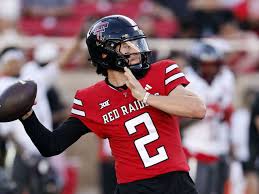
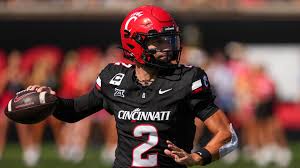
Sorsby wasn’t just another transfer. He was the transfer. After throwing 27 touchdowns to just five interceptions at Cincinnati and adding nine rushing scores, he became the top-ranked player in the portal and a centerpiece acquisition for a Texas Tech program chasing national relevance. Reports pegged his NIL valuation north of $5 million for the 2026 season—a staggering figure that placed him among the highest-paid players in the sport.
That combination—elite performance, massive financial expectations, and instant visibility—created a perfect storm. College athletes are now operating in a quasi-professional ecosystem, but without the same infrastructure that exists in pro leagues to monitor, educate, and protect players from risks like gambling addiction.
And make no mistake: this wasn’t a point-shaving scandal or a criminal investigation. Sources indicate Sorsby made a high volume of relatively small bets, with no evidence of game manipulation or external influence. This wasn’t corruption—it was compulsion.
That distinction matters. It shifts the conversation from punishment to prevention, from enforcement to responsibility.
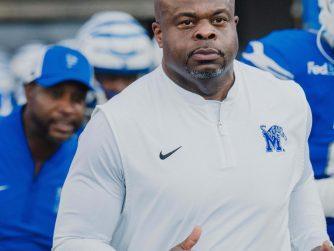
Texas Tech’s response reflects that nuance. Head coach Joey McGuire’s statement emphasized support and personal well-being over discipline, calling Sorsby’s decision to seek help “courageous.” In a sport that often prioritizes availability over humanity, that tone is notable.
But it also raises a harder question: why did it take this long for anyone to intervene?
The NCAA Built a Betting Era It Can’t Control
The NCAA’s gambling policy is clear and unforgiving. Athletes are prohibited from betting on any sports—college or professional—and violations tied to their own school can result in permanent ineligibility. There’s little gray area in the rulebook.
But outside that rulebook, the landscape looks very different.
College football is now saturated with sports betting partnerships, advertising, and integrations. Games are broadcast alongside live odds. Stadiums feature sportsbook branding. Media coverage increasingly incorporates betting lines as standard context. For players like Sorsby, gambling isn’t hidden—it’s normalized, monetized, and constantly visible.
That contradiction is impossible to ignore. The same ecosystem that tells athletes “don’t bet” is also profiting from a culture where betting is everywhere.
Sorsby’s case may be the first of its kind at this scale—a high-profile, active player entering treatment while still enrolled—but it won’t be the last. The NCAA’s enforcement model is reactive by design. It punishes violations after they occur. What it lacks is a proactive framework that addresses behavioral health risks tied to gambling, especially in an era where athletes are younger, wealthier, and more exposed than ever before.

And then there’s the eligibility question. If the NCAA applies its guidelines strictly, Sorsby’s wagers on Indiana could end his college career permanently. That would transform a mental health crisis into a career-ending punishment, a move that would likely ignite backlash across the sport.
Because here’s the uncomfortable truth: the system benefited from Sorsby’s talent, marketability, and production. Now it has to decide how it handles its vulnerability.
For Texas Tech, the football implications are immediate. With backup quarterback Will Hammond recovering from an ACL tear and unlikely to be ready for the opener, the Red Raiders face a sudden and destabilizing void at the most important position on the field.
But zoom out, and the bigger story isn’t about depth charts or win totals. It’s about a sport at a crossroads.
Sorsby’s situation forces college football to confront a reality it has tried to manage with rules instead of solutions. Gambling isn’t a fringe issue anymore—it’s embedded in the culture of the game. And until the NCAA and its member institutions reconcile that reality with meaningful support systems, education, and safeguards, cases like this won’t be outliers.
There will be warnings that weren’t taken seriously soon enough.