
Hunter Yurachek said the quiet part out loud last September, and Arkansas media let it slide right past without the scrutiny it deserved. The athletic director publicly admitted that the next Arkansas coach would have resources Sam Pittman did not have—resources needed to compete at a high level in the SEC. Not after Pittman was fired.
Arkansas Had the Money. They Just Didn’t Give It to Sam Pittman
While he was still coaching. While the Arkansas media was still running “hot seat” coverage and dissecting his recruiting failures and questioning whether he had reached his ceiling.
The Money Was Always There
For five years, Sam Pittman operated a program that Arkansas leadership systematically underfunded compared to SEC competitors, and the dominant narrative in Arkansas media was that Pittman could not recruit well enough, could not develop talent fast enough, could not get Arkansas over the hump. The institutional failure—the refusal to invest in NIL, the lagging support staff budgets, the competitive disadvantages that Yurachek himself would later acknowledge—was treated as background noise while Pittman absorbed blame for problems the people above him created. That is not journalism. That is carrying water for an athletic department that set up a coach to fail and then acted surprised when he did.
Now Ryan Silverfield is here, and suddenly everything has changed. Within days of his hiring, Arkansas was being described as operating in the top half of the SEC financially. The school is committed to stronger NIL backing, expanded support staff, and better resources across the board. A seven-figure donation materialized almost immediately after Silverfield was introduced at a basketball game. The money, the commitment, the institutional seriousness—it all appeared like magic once Pittman was out of the way. The Arkansas media has largely framed this as forward-thinking leadership and a renewed commitment to winning, rather than what it actually is: an admission that they starved one coach for years and are now trying to save face by funding his replacement.
If the money can show up this quickly for Silverfield, then its absence under Pittman was not some unavoidable reality of Arkansas’s budget or market position. It was a choice. Arkansas chose not to compete financially in the NIL era while Pittman was there. They chose to let him get outbid for recruits.
They chose to operate near the bottom of the SEC in financial commitment while expecting top-half results. And when Pittman pointed this out—when he publicly acknowledged that Arkansas was behind in NIL, that other programs were offering more competitive packages, that recruiting in this environment required resources Arkansas was not providing—he was criticized for making excuses. Meanwhile, the people who controlled those resources faced almost no public accountability from the state’s sports media for creating the conditions that made winning nearly impossible.
Pittman Got Blamed. The institution Got Protected
That double standard is the heart of this story, and it is playing out in real time. Pittman’s resource complaints were framed as weakness and excuse-making. Silverfield’s resource upgrades are being sold as vision and commitment. Pittman’s 2-10 season was treated as proof he could not hack it in the SEC. Silverfield inheriting that same 2-10 roster is being framed as a fresh start with championship-caliber support. The coach is different, but the institution is the same, and the Arkansas media is selling optimism instead of demanding answers about why this investment was withheld for so long.
The coverage of Silverfield’s first few months has been overwhelmingly positive, which is normal for a new hire but revealing in its contrast with how Pittman was treated during his struggles. A low-scoring spring game that “kept it vanilla” became evidence of discipline and smart coaching. Press conferences are promoted as must-see content. Every vague comment about culture or process is treated as insight rather than coachspeak. There is nothing inherently wrong with positive coverage of a new coach, but when that positivity is paired with a refusal to interrogate the institutional failures that destroyed the previous coach, it stops being journalism and starts being public relations.
Here is what Arkansas media should be asking but largely is not: Why did it take Sam Pittman’s firing for Arkansas to suddenly discover the money and commitment it now claims to have? Why was Pittman expected to compete in the most resource-intensive era of college football history with bottom-tier backing? Why are athletic directors and boosters who created this mess being praised for “stepping up” rather than held accountable for years of negligence? And why should fans believe this time will be different when the same people who underfunded Pittman are now promising championship resources for Silverfield?
Those questions matter because the pattern is predictable. A new coach arrives, the media sells hope, every development is spun positively, and the structural problems get pushed to the background until losses force a reckoning. Then the coach takes the fall, the administrators survive, and the cycle starts over with the next hire. Arkansas has run this script with Bobby Petrino, John L. Smith, Bret Bielema, Chad Morris, and now Sam Pittman. The names change, but the power structure remains intact, and Arkansas media keeps selling the same story: This time will be different. This coach is the answer. Trust the process.
Except this time, there is a smoking gun. Yurachek admitted Pittman did not have what he needed. That is not speculation or fan conspiracy. That is the athletic director on the record, saying the coach was set up to fail. And rather than treat that as a scandal—rather than demand accountability for why a coach was allowed to struggle for five years without competitive resources—Arkansas media has mostly moved on to selling Silverfield’s arrival as proof Arkansas is finally serious about football.
Silverfield Never Won His Conference
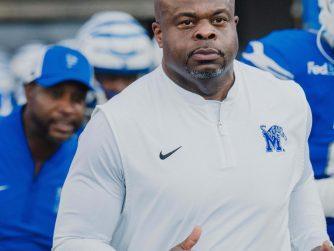
The irony is that Silverfield’s Memphis record should invite skepticism, not celebration. He spent years as head coach of a program that led the American Athletic Conference in NIL and revenue-sharing investment, a program with clear resource advantages over most of its competition. And in that environment, Memphis never reached the AAC Championship Game. Not once. Silverfield had money, he had support, he had a competitive edge over the rest of the league, and he still could not win the conference. Now he is at Arkansas, where even with upgraded resources, he will still be outspent by Georgia, Alabama, Texas, LSU, Texas A&M, and others, and the Arkansas media is treating this as a home-run hire because the alternative is admitting they helped sell a disaster.
None of this means Silverfield is doomed to fail. He may turn out to be exactly what Arkansas needs. He may succeed with the resources Pittman never had, and if he does, that will only make the institutional failure more obvious. But the real test here is not whether Silverfield can coach. It is whether Arkansas media can function as something other than a hype machine for an athletic department that has repeatedly failed its coaches and its fans.
Arkansas Media Won’t Ask Why
Because the story is not Ryan Silverfield. The story is that Arkansas spent five years refusing to invest in Sam Pittman, allowed him to fail under conditions the athletic director now admits were unwinnable, and then turned around and funded his replacement while the state’s media apparatus sold it as progress instead of admitting their role in propping up a broken system. That is the story. And until the Arkansas media is willing to tell it honestly, nothing will change—no matter how many fresh starts they sell or how many coaches they run through.
The propaganda works until the losses pile up. And when they do, the same outlets that are selling optimism right now will turn on Silverfield just like they turned on Pittman, and the cycle will continue because no one with power will ever be held accountable. Arkansas fans deserve better. They deserve media that asks hard questions of the institution, not just the coach wearing the headset. They deserve coverage that treats them like adults who can handle uncomfortable truths, not customers who need to be sold hope every offseason.
Ryan Silverfield is getting a chance Sam Pittman never got. The resources, the support, the benefit of the doubt—it is all there now in ways it was not before. And if the Arkansas media will not ask why, then someone has to.