
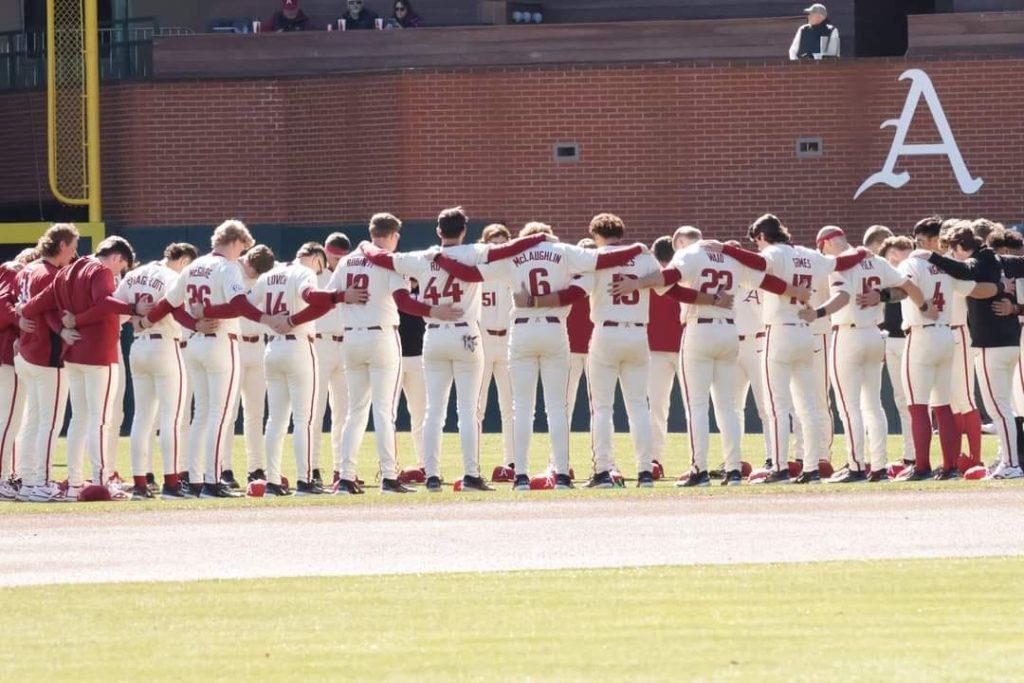
Arkansas baseball has knocked on the door long enough that you can almost feel the impatience in the concourse at Baum-Walker Stadium. The 2026 Razorbacks enter the season with the same blue-collar identity we’ve chronicled for years at 4 Star Sports Media, but this roster has a different kind of weight to it: veteran depth, physicality across the field, and a pitching staff stacked with real Friday-night stuff. This feels less like another promising Arkansas team and more like a window that is suddenly as open as it has ever been in the Dave Van Horn era.
For two decades, Van Horn has turned “pitching and defense first” from a slogan into a program standard. This season, that foundation is paired with a lineup that looks capable of punishing mistakes from February in Arlington to, potentially, late June in Omaha. The question around Fayetteville isn’t whether Arkansas is good enough. It’s whether this particular group can finally turn all that sustained excellence into the national title the fan base has been chasing.
Van Horn’s Window Is Wide Open
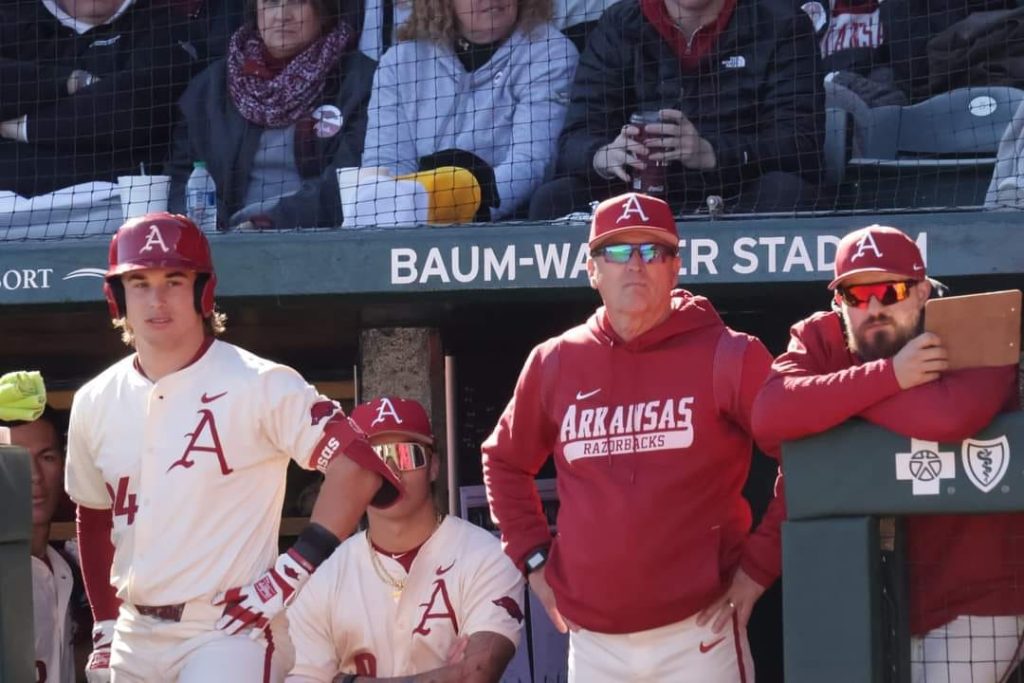
Dave Van Horn has spent years inching Arkansas closer and closer to the summit, and this roster feels like the culmination of that climb. The Razorbacks have the veteran presence, the balance of power and defense, and the kind of rotation depth you expect from a true national title contender. After so many near-misses we’ve covered in detail, the stakes around this group are obvious without anyone saying a word.
The weight of that expectation doesn’t change Van Horn’s approach, and that’s part of the appeal of this team. The same principles that carried Arkansas through previous Omaha runs still apply: control the strike zone, play clean behind your pitchers and win the small moments that decide postseason games. The difference now is that the lineup has enough thump to turn those small moments into crooked numbers.
Stability In The Big Chairs
Arkansas enters 2026 with the kind of staff continuity most programs can only hope for. Van Horn remains the steady hand at the top, but the voices around him matter just as much. Hitting and recruiting coordinator Nate Thompson has become the architect of Arkansas’ offensive identity, blending power with disciplined approaches and leveraging the portal to keep the lineup stocked with proven bats.
On the mound, Matt Hobbs continues to be one of the most influential assistant coaches in college baseball. His reputation for developing elite arms is already cemented, but the way this staff is layered — frontline starters, matchup weapons, and versatile swingmen — speaks to his ability to build a staff rather than just collect arms. Former Razorback Bobby Wernes and a robust support crew, including analytics and pitching-development specialists, round out a structure that allows Arkansas to maximize every inch of its roster.
Catchers: Quiet Luxury Behind the Plate
Catcher is usually a position where teams just hope to hold serve. Arkansas has turned it into a strength. Junior Ryder Helfrick enters as the projected everyday catcher and a legitimate middle-of-the-order bat, giving the Razorbacks rare offensive juice from a traditionally defense-first spot. His familiarity with SEC pitching and with Hobbs’ staff gives him immediate gravitas in the clubhouse.
Behind Helfrick, Arkansas has something even better than comfort: options. Graduate transfer Brendan Kleiman brings veteran savvy and game-calling experience, while underclassmen like Carson Willis and freshman left-handed bat Carter Rutenbar offer long-term upside. That combination of present production and future potential allows the staff to stay aggressive, knowing the game is in steady hands behind the plate, no matter who is catching.
Corners Built for SEC Power
If you were designing an SEC infield corner duo from scratch, it might look a lot like what Arkansas will roll out this spring. At first base, redshirt junior Reese Robinett is expected to anchor both the position and the middle of the lineup, bringing left-handed power and enough defensive reliability to steady the infield. He profiles as the kind of bat that can change a weekend series with a single swing.
Across the diamond, Texas Tech transfer TJ Pompey gives Arkansas both a prototype third baseman’s frame and the athleticism to stay there. His early draft buzz isn’t a coincidence; he looks the part of a future pro while filling a critical run-producing role. Depth pieces like redshirt freshman Tyler Holland and newcomers Alexander Peck and Cayden Mitchell ensure the Hogs can stay big, physical, and dangerous at the corners even when the lineup inevitably gets shuffled.
Middle Infield with Omaha Pedigree
Championship teams are usually built up the middle, and Arkansas checks every box there. At second base, former Vanderbilt transfer Cam Kozeal brings SEC seasoning and a left-handed bat that fits perfectly at the top of the order. His ability to grind at-bats, get on base, and set the table should set the tone for how this offense flows from pitch one.
At shortstop, Nolan Souza offers the rare pairing of size, athleticism, and left-handed power at a premium position. He doesn’t just hold down the most demanding spot on the dirt; he also lengthens the lineup in a way that forces opposing coaches into tough matchups. Behind them, freshmen like Carson Brumbaugh, local talent Luke Cornelison, and Fayetteville’s own Landon Schaefer give Arkansas both insurance and a clear succession plan without sacrificing defensive standards.

Outfield Depth, Power, and Range
The outfield looks like a microcosm of this entire roster: big, athletic, and deep enough to create real competition. Former BYU transfer Kuhio Aloy headlines the group as a middle-of-the-order right-handed bat who can handle multiple spots. He fits the mold of recent Arkansas transfers we’ve highlighted in past coverage — experienced, physical, and ready to hit SEC pitching right away.
Around Aloy, Arkansas has a mix of experience and upside that should give Van Horn plenty of lineup flexibility. Seniors Maika Niu and Zack Stewart provide power on the corners, while Damian Ruiz adds another seasoned presence with the athleticism to move around. Freshmen Christian Turner and Brenton Clark inject speed and left-handed pop into the mix, giving this staff multiple ways to configure its outfield depending on the park, the opponent, and the arms on the mound.
Right-Handed Arms with Friday-Night Stuff
Arkansas’ right-handed pitching group looks like the outcome of a plan we’ve been tracking for multiple seasons. Junior Gabe Gaeckle is a known SEC commodity who can slot comfortably at the front of the rotation or bury hitters in high-leverage relief. Sophomore Carson Wiggins, with his 6-foot-5 frame, has all the ingredients of a weekend workhorse if he continues to progress.
Transfer additions deepen that pool even further. Oklahoma product Jackson Kircher brings upper-90s velocity and clear rotation upside, the sort of arm that can tilt an entire series. Veterans like Cooper Dossett and Steele Eaves, along with in-state newcomers such as Mark Brissey and Grant Wren, add both experience and projection. The result is a right-handed stable that gives Hobbs multiple, legitimate choices for Friday and Saturday roles.
Left-Handed Wave No One Wants to See
If the right-handers provide the backbone, the left-handers give Arkansas its edge. Vanderbilt transfer Ethan McElvain arrives with the profile of a true Friday-night ace, combining size, stuff, and experience that should translate immediately in the SEC. Behind him, arms like Hunter Dietz, Cole Gibler, and Colin Fisher bring both ceiling and versatility, capable of starting or owning the late innings when healthy.
The depth doesn’t stop there. Veteran Parker Coil can move between rotation and bullpen, while additions such as Jacob Imoto, freshman Joey Lorenzini, and compact lefty Tye Briscoe offer different looks for every matchup. It’s the kind of left-handed wave that can smother opponents across an entire weekend, and it fits perfectly with what Arkansas wants to be on the mound: relentless, varied, and hard to game-plan.
Data, Design, and Roles on the Mound
What truly separates this staff is not just who is throwing, but how Arkansas chooses to deploy them. Under Hobbs and pitching-development leader Zach Barr, the Razorbacks have become known for embracing pitch design, video work, and role-specific planning. This is not a program that simply sets a one-through-four rotation in February and hopes it holds.
Instead, Arkansas leans into matchups, pitch shapes, and usage patterns to squeeze every edge it can find. That approach not only maximizes the current roster; it also helps young arms grow into bigger roles over the course of the season. By the time the postseason arrives, the staff is usually sharper, deeper, and more defined than it was on Opening Weekend — and that’s by design.
A Lineup Built to Punish Mistakes
On paper, the projected everyday lineup fits perfectly with what Arkansas has been building toward. A core of Kozeal, Souza, Pompey, Robinett, Aloy, and Helfrick gives the Razorbacks size, balance, and power through the heart of the order. There is enough left-handed presence to keep right-handed pitching honest and enough raw strength to change a game with one swing.
Just as important, that group can defend. Arkansas isn’t banking on outslugging its flaws; it’s aiming to pair efficient run prevention with timely, punishing offense. When this team is at its best, you can expect crisp work on the dirt, outfielders cutting off extra bases, and a lineup that punishes the mistakes every staff inevitably makes over nine innings.
Arlington: Statement Weekend at Globe Life
The first real answer to what this group can be will come in Arlington. The Shriners Children’s College Showdown at Globe Life Field has become a marquee early-season stage, and Arkansas is right in the middle of it again. Facing a slate that includes Oklahoma State, TCU, and Texas Tech, the Razorbacks won’t have the luxury of easing into 2026.
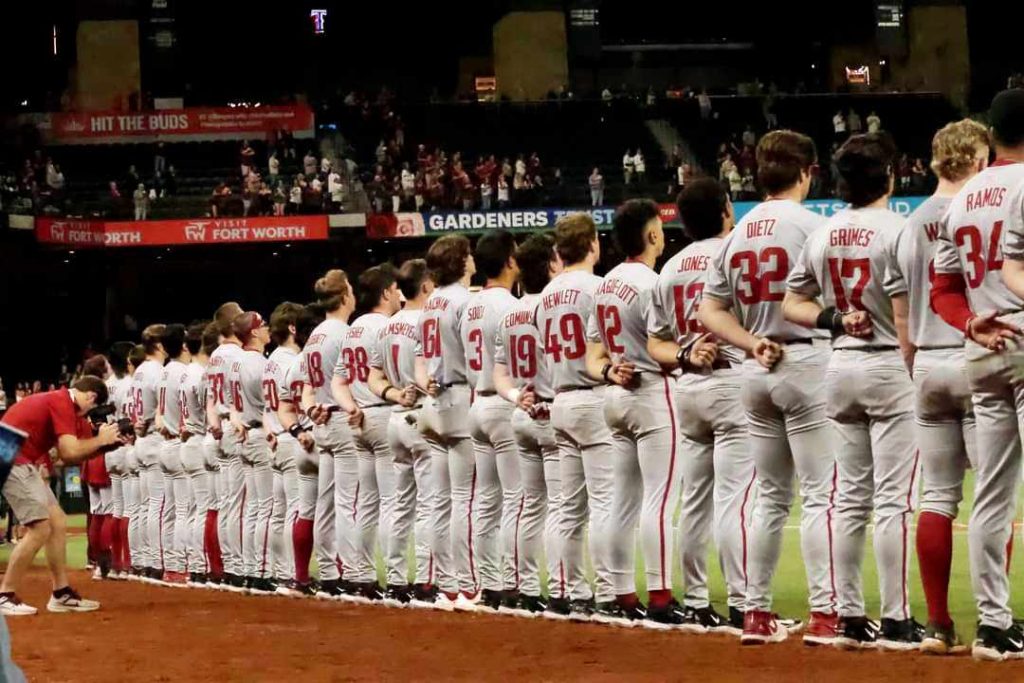
Those opponents bring the usual mix of mid-90s arms and physical lineups, which makes this event the perfect proving ground. Expect one of McElvain, Kircher, or Gaeckle to take the ball on Friday night, with Arkansas relying on its veteran infield and the power trio of Pompey, Robinett, and Aloy to generate early offense in an MLB-sized park. A neutral-site matchup with Tarleton State and a home opener against Xavier soon follow, but Arlington will tell us plenty about this team’s ceiling.
The “Now or Never” Feel
Around Baum-Walker, nobody needs to say “now or never” out loud for the message to land. Fans who have lived every pitch of Van Horn’s Omaha journeys — and readers who have followed our coverage of each close call — understand how rare it is to have this much talent and stability converge in one season. The 2026 Razorbacks are built to contend right away, and anything less than a deep postseason run will feel like a missed opportunity.
This is the burden and the beauty of a program that has made winning look routine. Arkansas has the coaching, the roster, and the schedule to take another full swing at a national title. Whether this group finally breaks through or simply adds another chapter to the “so close” file, it won’t be for lack of firepower — or expectation — in Fayetteville.