


A road can separate campuses. It cannot keep these neighbors out of each other’s lives. At Ouachita Baptist and Henderson State, the opponent is not waiting in another county or another corner of the conference.
98 Battles. Two Wins Apart. One Town That Never Forgets.
The opponent is across the highway. After 98 meetings, only two victories separate them—a remarkably narrow margin for a rivalry that has spent generations giving Arkadelphia something to remember, something to celebrate and something to argue about.
Before the Walk, There Was Thanksgiving
The Battle of the Ravine began on Thanksgiving Day in 1895, when Ouachita defeated the institution then known as Arkadelphia Methodist College, 8–0. What followed was not an uninterrupted annual appointment, but the development of a rivalry that would become part of the community’s identity.
Its early years established something that remains familiar: accomplishments elsewhere did not settle the local argument. Henderson won six consecutive meetings from 1907 through 1912. In 1914, Ouachita defeated Arkansas and Mississippi but could manage only a tie against its neighbor. Whatever those victories said about the Tigers, Henderson still had its own answer.
The rivalry has not always produced close games. Ouachita won 66–0 in 1919. Henderson answered with a 62–0 victory in 1932. Those results belong to the history alongside the one-point finishes and overtime escapes. A balanced series can still contain afternoons one side would rather forget.
By the late 1940s, the game had become an occasion that extended beyond the field. The Arkadelphia Jaycees promoted it as “The Biggest Little Football Game in America,” with a Thanksgiving morning parade helping turn the matchup into a community celebration. That phrase still offers a useful way to understand the rivalry. Small described the setting. It did not describe the importance.
A Rivalry Strong Enough to Resume
The series has endured interruptions as well as celebrations. World War II disrupted play, and excessive vandalism later contributed to a lengthy suspension. The schools did not meet from 1951 through 1962. When the game returned in 1963, Henderson won 28–13 and earned a share of the Arkansas Intercollegiate Conference championship.
The return immediately reinforced the football’s importance. This was not simply a tradition restored for nostalgia’s sake. There was a championship consequence attached to the scoreboard. More followed. Henderson’s comeback victory in 1969 delivered the AIC championship. Ouachita’s late winning drive in 1982 secured that title for the Tigers. In the modern era, the rivalry has repeatedly stood between a contender and the completion of an undefeated regular season.
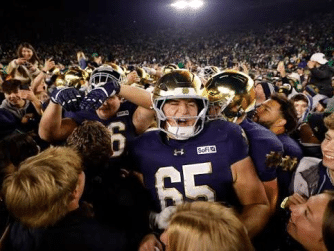
Henderson survived three overtimes in 2013 to finish unbeaten in the regular season. Ouachita completed undefeated regular seasons with rivalry victories in 2014, 2018, 2019 and 2022. The Tigers’ 2024 victory brought a GAC championship and a playoff berth. Those stakes matter to the rivalry’s place in college football. The traditions make it distinctive. The games give those traditions weight.
Campus pranks and protective rituals also became part of its history. The Tiger statue, Henderson’s fountain and other campus landmarks became symbols to defend. Some episodes were mischievous; others crossed boundaries and deserve to be remembered with that distinction intact. The story does not need every old incident polished into harmless fun. Its history is compelling enough to tell honestly.
The Road Is Short. The Memory Is Long.
Ouachita enters the 99th meeting with a 47–45–6 series advantage. Henderson owns the latest result, a decisive 41–14 victory in 2025. Neither side has to search far for an argument. Ouachita can point to its historical edge and its seven victories in the last 10 meetings. Henderson can point to two wins in the last three and the authority of last year’s performance.
This year adds matching 8–2 records to that conversation. But the numbers do not fully explain why the Battle of the Ravine holds its place. The setting supplies something a standings table cannot. The visiting team walks to the game. The opponent’s campus remains visible. The losing side does not disappear over the horizon after the buses leave.
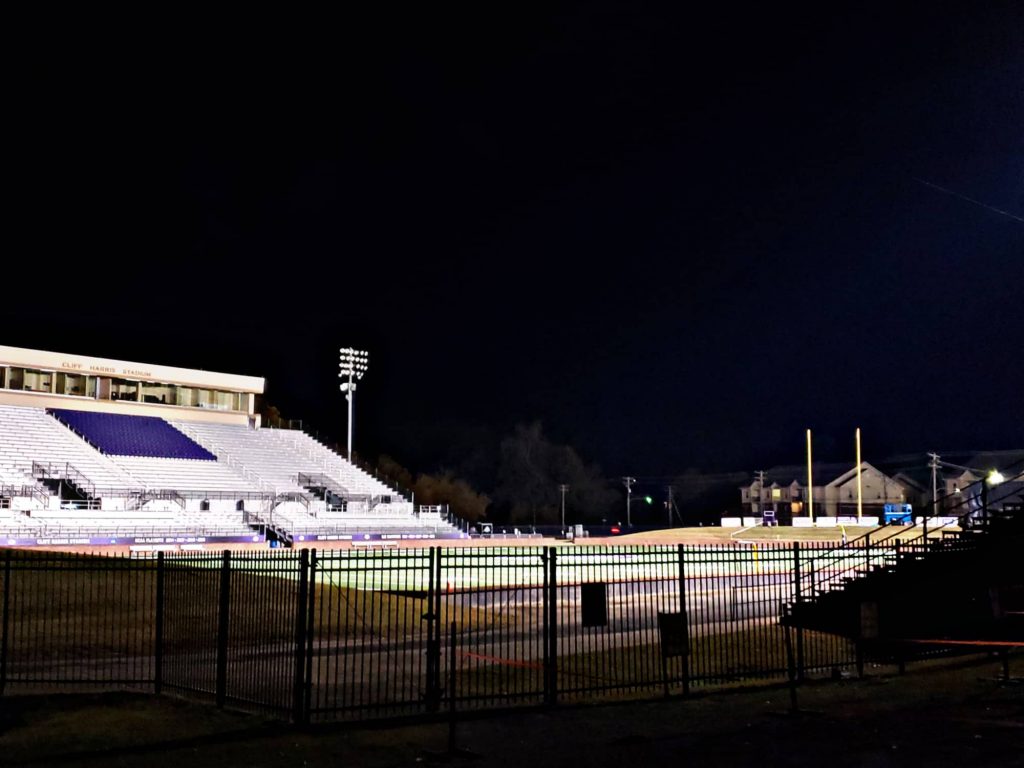
Credits – Wes Pruett
That proximity gives the rivalry its unusual force. The people celebrating are not somewhere else. Neither are the people remembering. For 4 Star Sports Media, that is the story behind the week’s coverage: the history that built the game, the people who carry it and the football that will determine the next chapter. Neighbors all year. Opponents for one afternoon. When that afternoon ends, the highway will still be there. So will the neighbors. Only the side with the last word will change.